
THCA vs THC: That Extra Letter Means Something

Myth Check · Episode 2 of 7
Weed terminology already has enough abbreviations to look like a group chat with no vowels. Then a label puts THCA beside THC, and suddenly one extra letter has everybody arguing.
THCA and THC are related, distinct chemical compounds. THCA is tetrahydrocannabinolic acid; THC usually means delta-9-tetrahydrocannabinol in this comparison. The A points to the acid form. It is not a brand name, a quality grade, or a newer spelling of the same molecule.
The interesting part is small enough to fit in a molecular drawing: THCA carries a carboxylic acid group that THC does not. That tiny structural difference is why the names deserve separate lines.
The extra A is doing actual chemistry
The National Library of Medicine’s PubChem records list delta-9-THCA with the formula C22H30O4 and THC as C21H30O2. You do not need to memorize either one. Notice that the atom counts differ.
In a chemistry name, acid describes a chemical group. It does not mean THCA is the substance people mean when they use acid as drug slang. Same everyday word, different context.
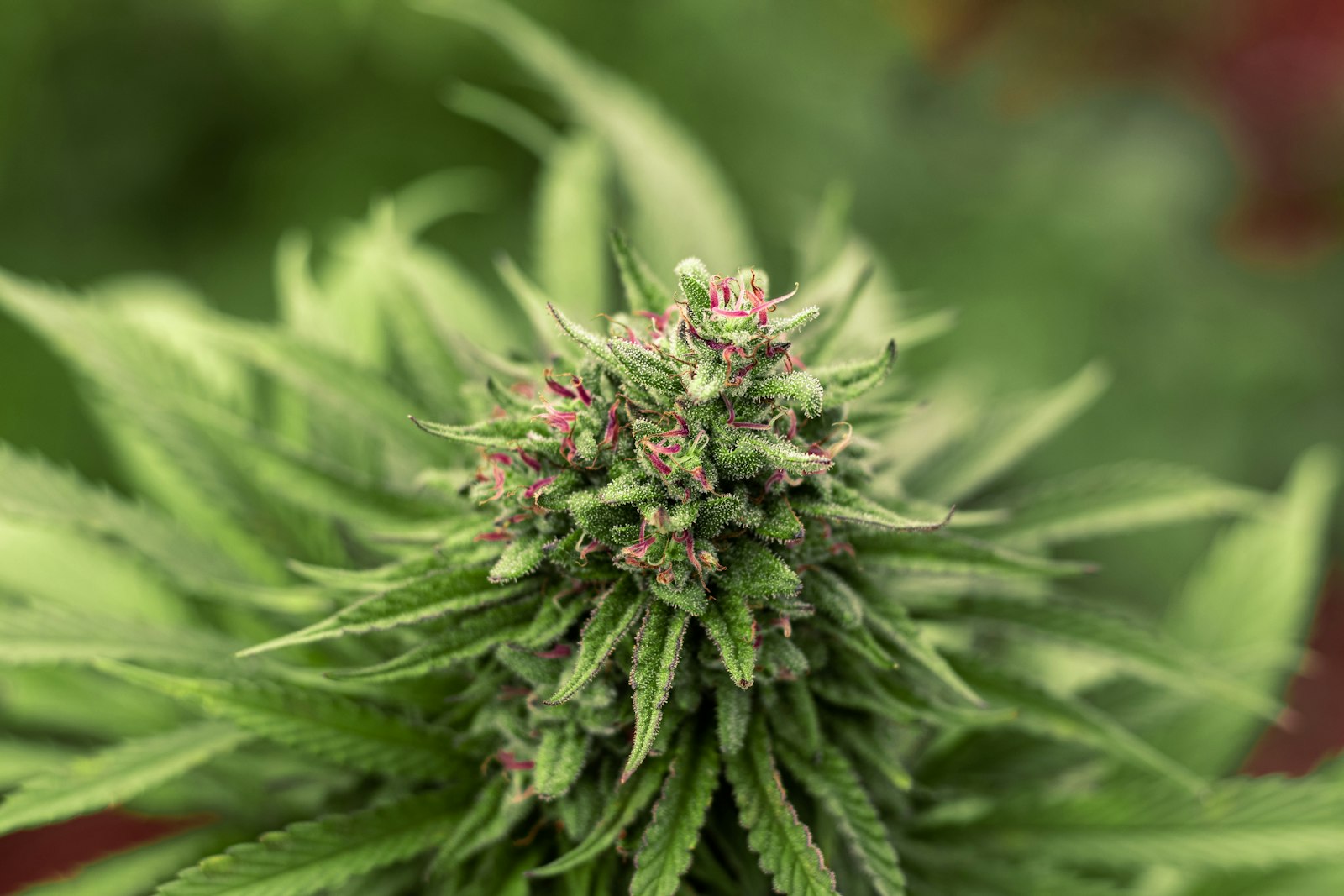
A molecular diagram is also different from a plant photo. A close-up shows physical structures on a specimen; the molecular drawing shows how atoms connect in a compound. Our cannabis anatomy guide covers the bigger structures you can actually see under magnification.
Spot the extra piece
THCA’s molecule picture at PubChem — Open the structure picture and put it beside THC. The extra letter has a real visual difference behind it.
THC’s molecule picture at PubChem — Keep this one in the next tab and compare the structures. It is basically a very small spot-the-difference game.
Why cannabis chemistry comes with so many acid forms
Cannabis does not build all of its familiar cannabinoids in the exact neutral forms used in casual conversation. Research on the plant’s enzymes describes pathways producing acidic compounds, including THCA and cannabidiolic acid, or CBDA.
A 2007 enzyme study examined CBDA synthase and compared it with THCA synthase. Those names describe different enzymes involved in forming different acidic cannabinoids.
That gives the alphabet soup some order. THCA relates to THC, while CBDA relates to CBD. Seeing an A does not mean every acronym becomes interchangeable; it points to the acid form of the particular compound named.
This is why a flower’s chemical description can be more detailed than the one headline word people use for it. The plant has a mixture, and a useful analysis keeps the different members of that mixture separate.
Decarboxylation: a long word for losing a group
THCA can change into THC through decarboxylation, a chemical reaction in which carbon dioxide is released. A 2016 laboratory study measured the conversion of several acidic cannabinoids and tracked how the acid and neutral forms changed.
The word breaks down into the change it describes: removal of the carboxyl group. It sounds like a semester-long problem, but the central idea is one molecule becoming another while losing part of its original structure.
That also explains why the conversion is not simply a name swap. The molecular mass changes. Any calculation combining an acid form with its neutral counterpart needs to account for that difference, rather than pretending the two are identical quantities of the same molecule.
Why lab reports can list THC and THCA separately
Separate rows let an analysis report the chemical forms measured in the tested sample. A row labeled THC and a row labeled THCA are not redundant just because the words look alike.
Some reports also use a calculated total that combines related forms under a stated convention. A calculated total answers a different question from the measured amount of one individual compound. The definition beside the result matters.
The 2016 study also illustrates why analytical methods matter: the researchers compared results from different laboratory approaches. A result is a measurement made with a method, not a number that exists independently of how the sample was examined.
This is where the design of a label can get ahead of its explanation. The largest number or boldest acronym does not automatically explain the measurement underneath it. Our cannabis packaging article looks at that gap between visual emphasis and information.
Three shortcuts that make the comparison messy
“They are exactly the same.” They are connected by a chemical transformation, but a precursor and the compound it can become are still distinct.
“THCA means the entire sample contains no THC.” One compound’s name does not establish the complete contents of a mixture. An analysis can report more than one cannabinoid.
“The A tells you everything about a product.” It identifies part of a chemical name. It does not supply the sample’s full composition, source, or testing history.
Those are label-reading distinctions, not a reason to turn one acronym into a universal promise. The same habit helps with the broader claims in our weed myths guide: keep the actual information attached to the actual claim.
The useful version for a normal conversation
THCA is the acid precursor associated with THC. The compounds have different structures, and chemical changes can connect them. A test that names both is giving you more detail than the shorthand THC alone.
That extra letter was never just there to make the label look more scientific. It marks a real molecular difference. Once you see what it is pointing at, the conversation gets a lot less mysterious. Understanding THCA vs THC on a lab report starts with knowing whether a row names a measured compound or a calculated combination.
Sources
- PubChem: delta-9-tetrahydrocannabinolic acid, CID 98523
- PubChem: tetrahydrocannabinol
- Taura et al., 2007: Cannabidiolic-acid synthase
- Wang et al., 2016: Decarboxylation Study of Acidic Cannabinoids
Series cover: original AI-assisted editorial illustration for Trap Snap LA. Photographs carry their own credits.
Questions about THCA and THC chemistry
Is THCA the same compound as CBDA?
No. They are acidic cannabinoids with different named chemical identities and pathways. The analytical decarboxylation study treats several acid/neutral cannabinoid pairs separately, rather than using THCA as a catch-all name for every acid form.
What does a PubChem CID for THCA identify?
It is an identifier for a chemical-compound record. CID 98523 identifies delta-9-tetrahydrocannabinolic acid, not a cultivar, brand or a specific cannabis batch.
Does the word acid in THCA mean the drug slang acid?
No. THCA’s chemical structure contains a carboxylic-acid group. The word names part of this molecule’s chemistry; it is not a reference to an unrelated drug slang meaning.
Is calculated total THC the same as directly measured delta-9 THC?
No. NIST’s analytical paper defines total THC using both THCA and delta-9 THC contributions. A combined total and the measured neutral compound are different report entries; the report’s definition explains the convention used.
Tags: THCA vs THC on a lab report; THCA acid form and chemical identity


