
Can Indica and Sativa Tell You the Whole Story?

Myth Check · Episode 6 of 7
Indica or sativa? Two words can start a longer argument than the entire strain name. Somebody points to the leaf shape. Somebody points to an ancestry percentage. Somebody treats a commercial label like the plant already filled out a personality test.
The better question in the indica vs sativa debate is what those labels actually describe. Research finds that broad commercial indica/sativa categories do not reliably summarize a cannabis sample’s full genetic and chemical profile.
That is not the same as saying every plant is identical or every label contains zero information. The more interesting findings sit between those extremes.
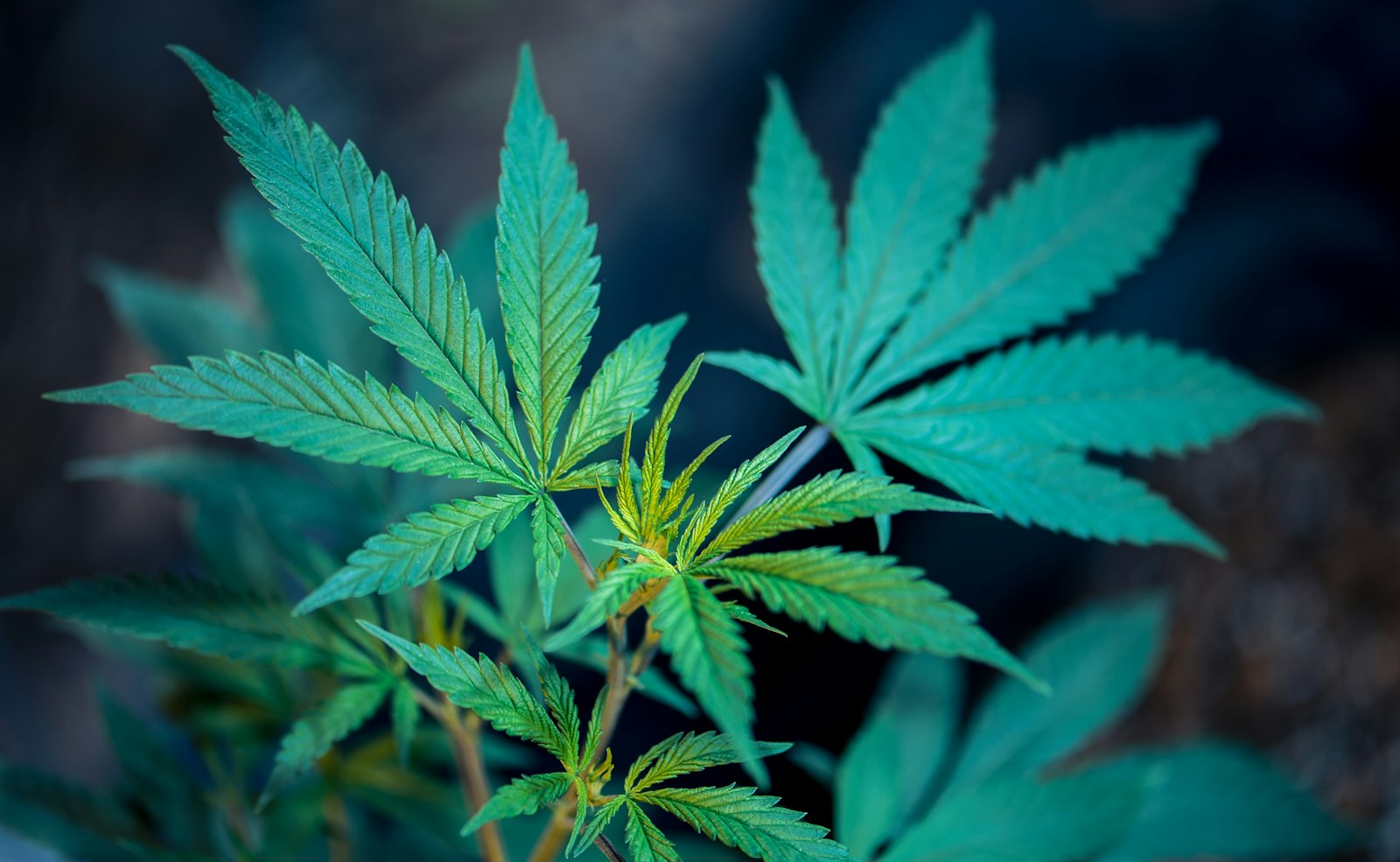
First, decide which meaning you are using
Indica and sativa can appear in discussions of botanical classification, reported ancestry, visible plant traits, and commercial categories. A conversation gets messy when people slide between those meanings without noticing.
A scientific plant name is not automatically a chemical inventory. A seller’s category is not automatically a measured ancestry calculation. A leaf description is not automatically evidence for every other feature somebody associates with it.
Our weed slang guide deals with a similar issue: a familiar word can be useful in conversation while still being too broad to act as a precise measurement.
With indica and sativa, start by identifying the claim. Is it about the plant’s lineage? The compounds in one specimen? Or the way someone chose to categorize it? Those questions need different evidence.
A leaf-shape detour worth taking
Frisian Duck’s very unusual photo album — After all the familiar wide-leaf and narrow-leaf graphics, these duck-foot leaves are a fun curveball.
Indica vs sativa research: labels and terpene genes
A 2021 Nature Plants study compared cannabis labeling with genetic and chemical data. The researchers found that the commercial sativa–indica scale poorly captured overall genomic and chemical variation.
But they also found associations with a small number of terpenes and genetic variation in terpene-synthase gene regions. The label had some relationship to particular features without supplying a complete description of the plant.
This is the nuance that disappears when a headline gets shortened to labels are fake. A category can correlate with a narrow set of traits while remaining a weak summary of the larger picture.
Imagine sorting a music library into chill and upbeat. Those labels might relate to tempo in some tracks, but they still leave genre, instrumentation, lyrics, and a lot of other differences unresolved. One association is not an entire profile.
A larger chemical dataset did not create two neat piles
A 2022 PLOS ONE study analyzed 89,923 commercial flower samples from six US states. When researchers compared indica, hybrid, and sativa labels with terpene-profile patterns in THC-dominant samples, the labeled groups substantially overlapped.
Grouping by measured terpene information described those patterns better than the familiar commercial categories. The study also found specific associations, such as sativa-labeled products being overrepresented in one chemically defined cluster.
Again, the conclusion is a limited labeling system, not an absence of chemical diversity. Distinct profiles existed. The everyday categories did not consistently organize them into cleanly separated groups.
The dataset is large, but it is still a dataset of particular samples, laboratories, and markets. It is not an inventory of every cannabis plant in every region or era.
Leaf width cannot settle the whole debate either
A separate 2021 study of intercrossed cannabis lineages examined relationships between visible plant traits and cannabinoid chemistry. The authors found that commonly assumed trait associations did not share a straightforward genetic basis in the plants studied.
The implication is narrow and useful: appearance and chemistry do not have to travel together as one fixed package after lineages have been crossed. A visible trait cannot automatically stand in for the compound profile.
The same reasoning applies to attention-grabbing color. Our purple cannabis article explains why pigment is an interesting trait on its own. Adding purple to an indica/sativa argument still does not fill in the missing chemical measurements.
Genotype vs phenotype vs chemotype in cannabis
| Description | What it addresses |
|---|---|
| Genotype | Genetic information in the plant |
| Phenotype | Observed characteristics, including appearance |
| Chemical profile or chemotype | Measured compounds or a pattern of chemical composition |
These descriptions can relate to one another, but they are not synonyms. A study can investigate how strongly two sets of information correspond instead of assuming that correspondence from a nickname.
The commercial category is another layer on top. It may preserve a naming tradition or a reported relationship, but it does not replace the information in each of those scientific descriptions.
Better categories still need clear boundaries
Measured chemistry gives researchers a more specific basis for comparison. It does not, by itself, turn one sample’s results into a universal prediction of a person’s experience. The studies discussed here investigate plant variation and labels, rather than proving every claim people attach to those labels.
Nor does the weak performance of a broad category mean a single dominant terpene tells the entire story. Cannabis aroma contains more than terpenes, as our aroma chemistry article explains.
You can keep indica and sativa as familiar conversation starters. Just give the words room to be incomplete. The plant has genetic history, visible traits, and chemistry worth discussing separately.
Two labels are easy to remember. The details they leave out are where the more interesting cannabis conversation starts.
Sources
- Watts et al., 2021: Cannabis labelling is associated with genetic variation in terpene synthase genes
- Smith et al., 2022: The phytochemical diversity of commercial Cannabis in the United States
- Vergara et al., 2021: Widely assumed phenotypic associations lack a shared genetic basis
Series cover: original AI-assisted editorial illustration for Trap Snap LA. Photographs carry their own credits.
More questions about indica and sativa research
Are indica and sativa percentages a complete genetic test?
No. A commercial percentage is not the same as a laboratory analysis of ancestry. The Nature Plants study found the broad labeling scale was a weak summary of overall genomic variation. The 2021 genetic and labeling study.
Do hybrid strains have a unique chemical profile?
Not automatically. In the commercial-flower dataset, indica, hybrid and sativa labels overlapped substantially in their terpene patterns. A category word cannot replace the measured profile of a sample. The 2022 flower-chemistry study.
Did indica and sativa labels have any connection to terpenes?
Yes. The 2021 study found associations with a limited number of terpenes and relevant gene regions. A narrow association can be real while the labels remain incomplete descriptions. The Nature Plants findings.
Does leaf shape prove the cannabinoid content of a cannabis plant?
No. Leaf appearance is an observed trait, while chemical content is measured separately. The labeling studies do not justify substituting a wide-leaf or narrow-leaf photograph for a sample’s chemical profile. The study’s distinction between labels and chemistry.
Did the indica and sativa studies test human effects?
The cited studies compared plant genetics, chemistry and commercial labels. Those endpoints do not provide a universal prediction of an individual person’s subjective response. The stated scope of the labeling research.
Tags: indica sativa label research explained; cannabis genotype phenotype chemotype differences


