
Why Does Weed Smell Like Gas, Cheese, or Fruit? The Aroma Plot Twist


Trap Snap LA editorial • Culture & Fun • 5 min read
Cover photo: Tim Foster / Unsplash.
Gas. Cheese. Grapefruit. A suspiciously specific tropical fruit. Cannabis aroma descriptions can sound like somebody got locked inside a grocery store next to a mechanic shop.
The funny part is that these comparisons sometimes point to real chemistry. They are not automatically proof that someone added fruit flavoring, spilled fuel, or invented a name for the label. But they are also not a laboratory result. When somebody says a strain smells like gas, they are describing an impression, not identifying everything inside it.
So why does weed smell like gas, cheese, or fruit? The answer gets more interesting once terpenes stop being the only characters in the story.
Why weed smells like gas or skunk: sulfur compounds
A 2021 cannabis aroma study linked the characteristic skunky scent to a family of prenylated volatile sulfur compounds, including 3-methyl-2-butene-1-thiol. That gives the familiar gas-and-skunk conversation a chemical explanation beyond a basic terpene chart.
Still, gas is a comparison. People use it for an aggressive, sharp, fuel-like impression. That is different from claiming a cannabis sample literally contains gasoline. A name such as Diesel is also a name, not a fuel analysis. Those two ideas get blurred surprisingly fast in casual conversation.
Think about describing a song as dirty. Nobody thinks the audio file has mud on it. Aroma language works in a similar way: a familiar image helps explain a difficult sensation. Gas tells another person roughly where your nose went. It does not finish the scientific conversation.
That is why a dramatic smell description should leave room for detail. Sharp and sulfurous is a more useful explanation than just typing GAS in all caps and calling the investigation complete.
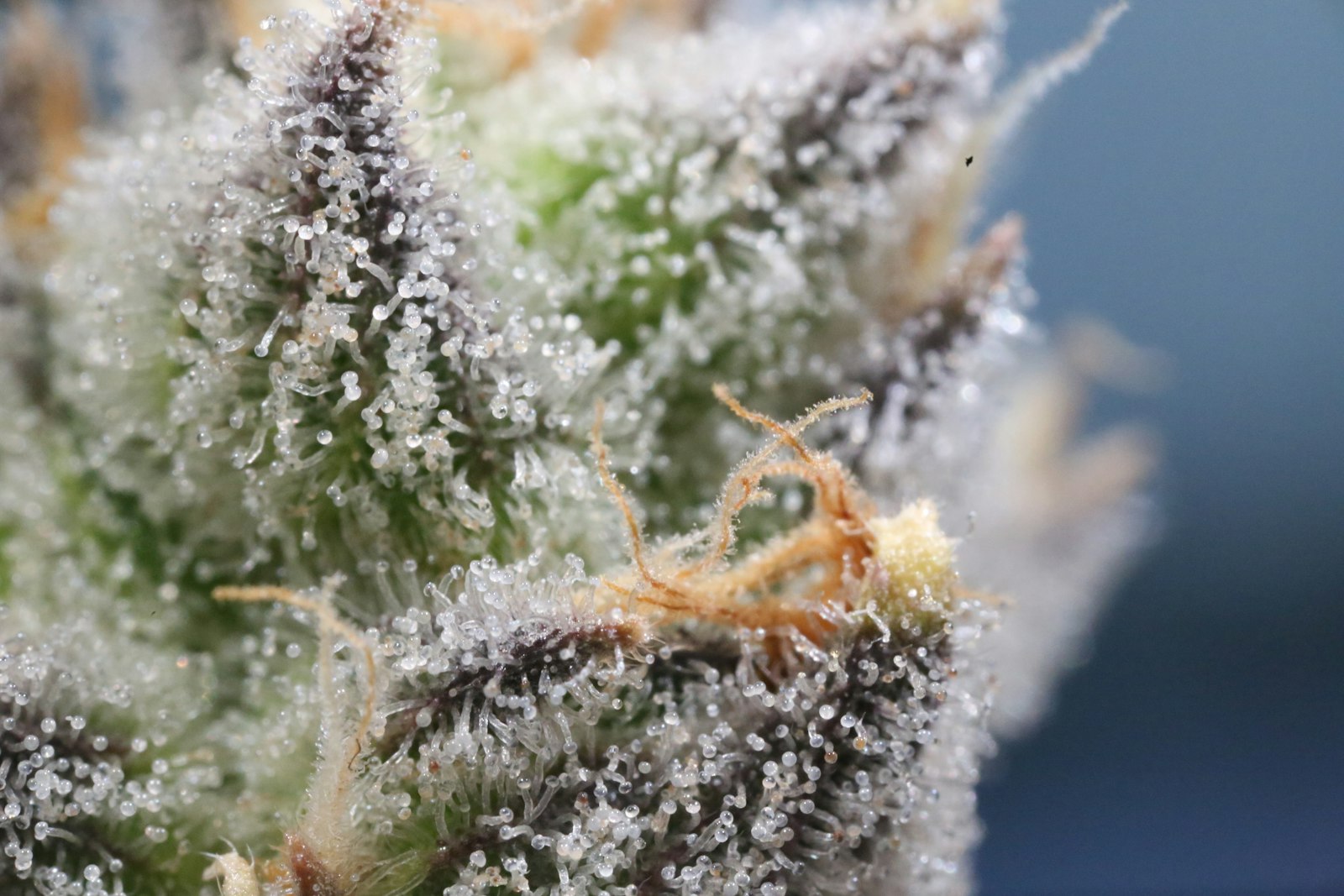
Why weed smells fruity: more than limonene
In a 2023 study of 31 cannabis rosin extracts, researchers identified minor nonterpenoid compounds associated with differences in aroma. These included tropical sulfur compounds and other odorants. Some compounds were linked with citrus or tropical impressions despite being present at low concentrations.
That finding complicates the familiar shortcut where every lemon note becomes limonene and every interesting scent gets filed under terpenes. Terpenes matter, but a short list of the biggest ones does not necessarily describe the whole smell.
Aroma comparisons are useful because everyone already has a mental library. Grapefruit peel, ripe mango, and a fruit-flavored drink are different references, even though all three could get compressed into fruity. Once the description becomes more specific, the conversation becomes more interesting.
The important distinction is between resemblance and ingredients. Saying a plant smells like pineapple does not establish that pineapple is in it. A cannabis scent note and the ingredient list of a manufactured product answer different questions.
Cheese notes: weird, yes; fully solved, no
A separate 2024 study compared five rosin extracts from different phenotypes of the same cannabis cross. Researchers reported octanoic and decanoic acids and discussed their possible contribution to cheese-like aromas. They also said more analysis of cheese-described varieties would help clarify the relationship.
That last part deserves its own spotlight. The paper does not hand us a universal formula for every strain with Cheese in the name. It identifies a promising explanation in the samples studied. Different examples can have different chemistry, and a commercial name is not a guarantee of a matching chemical profile.
Cheese is also a wide category. Fresh dairy, aged cheese, tangy cheese, and a sharp blue-cheese impression are not the same smell. Treating all of them as one note is like calling every film a comedy because somebody laughed once.
There is a good lesson here: research can make a strange smell more understandable without making it completely settled. Leaving the question partly open is more honest than inventing a neat answer.
Your nose describes a mixture, not a THC meter
A 2015 study paired chemical analysis with human olfaction to investigate marijuana odor. Its approach highlights a useful distinction: finding a compound and understanding its odor impact are different jobs. Concentration, detection threshold, and the surrounding mixture all matter when explaining a smell.
Picture a playlist with ten quiet tracks and one much louder track. Counting the tracks would not tell you which one dominates what you hear. The comparison is imperfect, but it helps explain why the biggest chemical percentage is not automatically the biggest aroma impression.
Researchers studying consumer perceptions in 2018 found that people could distinguish cannabis aroma profiles and that scent was associated with their judgments about things such as potency and price. Those were perceptions, though. The study did not turn smelling into an accurate THC test.
That is where everyday conversation can get carried away. A smell can be memorable, recognizable, or personally unpleasant. None of those reactions establishes a cannabinoid percentage, identifies every contaminant, or proves a product is authentic.
A more useful description separates the observation from the conclusion: earthy with a sharp citrus edge is an observation. Therefore it must be stronger is a leap. The first gives somebody information. The second gives a guess a lab coat.
Quick reveal: does fruity automatically mean added flavor?
No. A fruit-like aroma can come from the plant’s naturally occurring volatile compounds. For a manufactured product, whether flavoring was added is an ingredient and documentation question. The smell alone cannot settle it.
Quick questions
Are terpenes responsible for every cannabis smell?
No. Cannabis aroma research includes sulfur compounds and other nonterpenoid odorants as well as terpenes. A terpene chart can be useful without being the full scent story.
Does a louder smell prove higher THC?
No. Aroma intensity and a cannabinoid measurement are different kinds of information. Describe the smell for what it is, and leave the number claims to properly documented testing.
Sources and further reading
- ACS Omega: identification of prenylated sulfur compounds in cannabis, 2021.
- ACS Omega: minor nonterpenoid compounds and cannabis aroma, 2023.
- ACS Omega: nonterpenoid chemistry and phenotype aroma, 2024.
- PLOS ONE: chemical and sensory analysis of marijuana odor, 2015.
- PLOS ONE: consumer perceptions of cannabis aroma, 2018.
More questions about weed aroma chemistry
Why can weed have a chemical smell?
A 2023 study identified skatole, also called 3-methylindole, as an important source of chemical aroma in some studied varieties. That research finding does not identify the contents or safety of an arbitrary sample by smell. The study’s chemical-aroma finding.
Can similar terpene profiles smell different?
Yes. Researchers found markedly different aromas among studied varieties with similar terpene expression. Minor nonterpenoid compounds helped explain the differences, so matching the major terpenes need not produce an identical scent. The primary aroma study.
Which sulfur compounds can make weed smell citrusy?
The researchers identified a class containing the 3-mercaptohexyl functional group in certain citrus-smelling varieties. This is more specific than assuming every citrus impression comes from limonene, and it remains limited to the samples investigated. The citrus sulfur-compound finding.
Tags: weed chemical smell skatole research; citrus weed aroma sulfur compounds



2 thoughts on “Why Does Weed Smell Like Gas, Cheese, or Fruit? The Aroma Plot Twist”