
Old-School Weed Culture vs Today: The Bag Changed, the Debates Didn’t


Trap Snap LA editorial • Culture & Fun • 5 min read
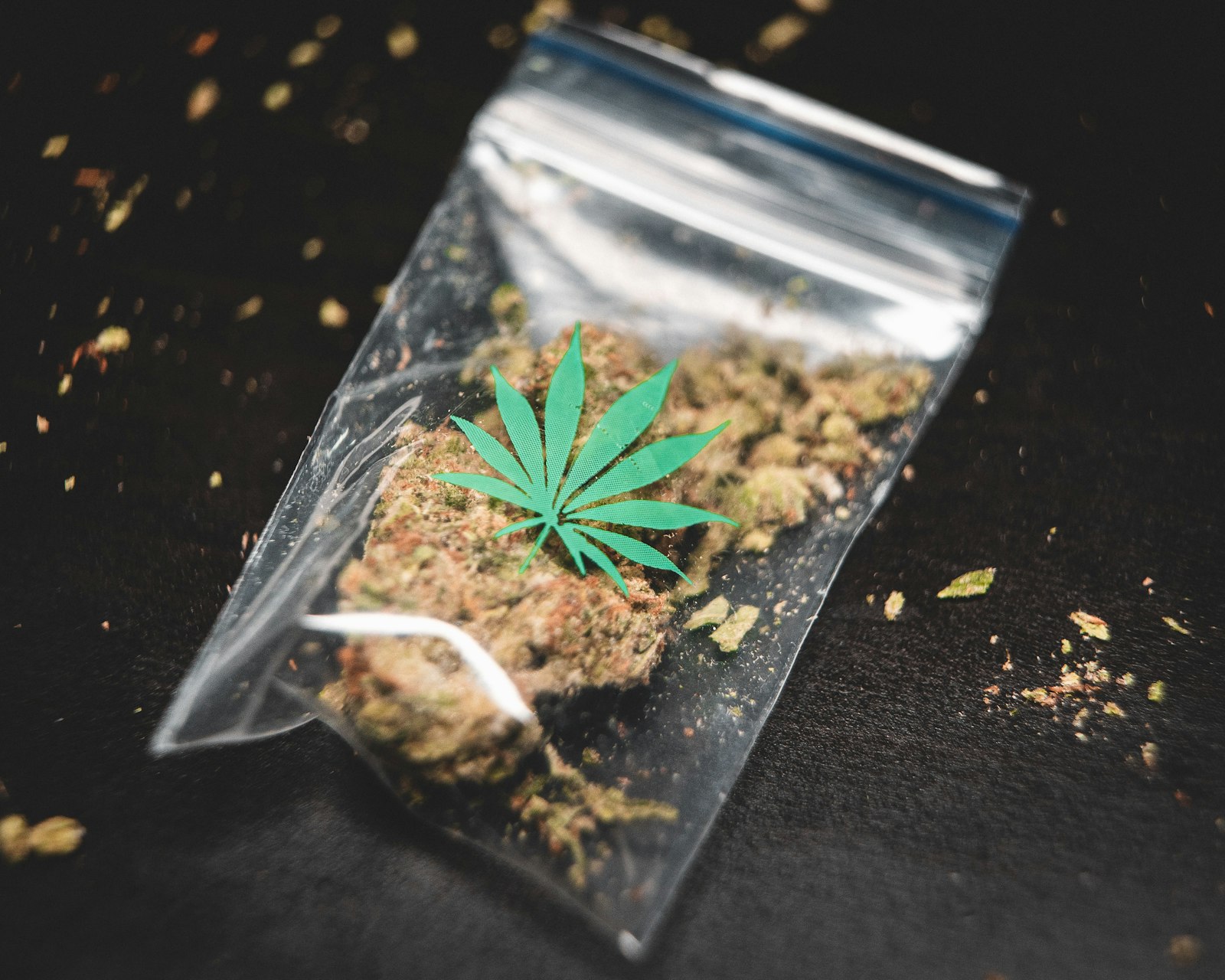
Cover photo: Andrea Cipriani / Unsplash.
Every culture has the person who thinks it peaked before you got there.
In cannabis conversations, that person might miss the old slang, the music, the simpler packaging, or the days when every topic did not arrive with a brand account and a comment section.
Fair enough. Nostalgia can tell a good story. It can also quietly remove every inconvenient detail.
Old-school weed culture versus today is more interesting when we compare actual examples instead of pretending one generation had all the answers. The objects, public image, and available information have changed. The urge to argue about authenticity seems harder to retire. A useful comparison of old-school weed vs modern weed separates changes in measured chemistry from changes in slang, design and personal memory.
Old-school is not one decade or one experience
First, old-school needs a date. A person remembering 1970s counterculture and a person remembering the late 2000s are not talking about the same era. Even in the same year, different places had different laws, communities, and risks.
The Smithsonian’s National Museum of American History holds rolling-paper cases and paper packs as artifacts connected to marijuana, tobacco, and twentieth-century counterculture. These ordinary objects help show how a scene leaves evidence behind.
A paper pack can tell us about design and language. It cannot tell us what every person thought, how every neighborhood worked, or whether the whole era was somehow more genuine.
That is a useful rule for any history conversation: start with a specific artifact, person, place, or date. A photo of one living room is not a census. A memorable story is not every story.
As a visual comparison, though, these objects are great. Typography, colors, sizes, and wear make history feel like something people actually handled rather than a paragraph in a textbook.
The shift into regulated retail came with real dates
Colorado offers a concrete example. Voters approved its medical-marijuana amendment in 2000 and adult-use Amendment 64 in 2012. Adult-use retail sales began on January 1, 2014, according to the Colorado General Assembly.
History Colorado has collected objects connected to that transition. Its account explains why documenting legalization involves everyday items and contemporary collecting, not just saving legal paperwork.
That gives the then-and-now conversation something firmer than a vague sense that weed suddenly became mainstream. A change in law can produce changes in businesses, signs, packaging, and the kinds of objects a museum might preserve.
It also keeps the discussion honest about geography. Colorado’s timeline describes Colorado. It does not stand in for every other state, country, or legal system.
Instead of asking when cannabis culture changed everywhere, ask when this particular community’s environment changed. The answer will probably be more specific, and much more useful.
The branding became part of the conversation
One documented design example is Pentagram’s work for Leafs by Snoop in 2015. Its case study presents a coordinated identity, packaging, and website, including a stylized geometric leaf. The project shows cannabis branding being treated as a full design system.
That is a different kind of object to talk about: not just a container, but a recognizable visual world.
Our editorial read is that this creates a familiar tension. A consistent identity can make a brand recognizable, while the same polish can make somebody else complain that the culture got too corporate. Both reactions are opinions about the presentation, not measurements of the contents.
The argument resembles streetwear, sneakers, and music merchandise. Does better presentation preserve a scene, change it, or simply make it easier to market? People can disagree without one side having exclusive ownership of authenticity.
A useful conversation separates design from the claim attached to it. A distinctive logo is evidence of a distinctive logo. It is not automatic evidence of better chemistry or a more meaningful connection to a community.
Information got easier to share, but certainty is still expensive
A modern cannabis conversation can jump from strain names to cannabinoids to aroma research in seconds. That vocabulary can open interesting questions. It can also make a guess sound unusually official.
A 2021 genetic and chemical study found that familiar sativa-indica labels poorly captured overall genomic and metabolomic variation in its samples. The practical lesson is that a confident category name does not necessarily summarize a complex plant.
The internet makes it possible to find the paper. It also makes it possible to find ten posts that flatten the paper into a slogan. Access to more information and access to accurate understanding are related, but they are not identical.
That is a change worth appreciating without romanticizing it. Older conversations did not come with an automatic truth detector. Newer conversations do not either.
A better habit in either era is asking where the claim came from. A personal memory, brand statement, laboratory result, and published study all provide different kinds of evidence. Giving each one the right weight makes the conversation better.
Then-versus-now arguments worth having
The most interesting questions are about specific tradeoffs. Which packaging design tells you something useful? Which slang term actually communicates? Which story has a source? Which change made information clearer, and which only made the visuals louder?
Those questions leave room for personality. You can prefer a scruffy old design because it feels connected to a moment. Somebody else can prefer a clean contemporary layout because it is easier to read. Taste does not need to masquerade as historical fact.
The same goes for music and film. A soundtrack may remind someone of an era, but that feeling belongs to that person. It does not prove everybody experienced the culture the same way.
Pick your debate: retro paper pack or modern design system?
Choose one visual style, then explain what you like without making a claim about potency, safety, or somebody else’s authenticity. The challenge is describing the design itself. It gets more interesting than old good, new bad pretty quickly.
Quick questions
Was old-school cannabis culture more authentic?
Authenticity is a judgment, not a laboratory measurement. Specific people and communities have real histories, but no generation gets a universal certificate proving it represented the culture better than everyone else.
Did legalization change every place at the same time?
No. The Colorado dates discussed here are a local example. Different places have their own legal histories, and local details matter when comparing eras.
Sources and further reading
- Smithsonian: EZ Wider rolling-paper case collection record.
- Colorado General Assembly: State Taxes on Marijuana, 2014.
- History Colorado: collecting the history of legalization.
- Pentagram: Leafs by Snoop design case study.
- Nature Plants: cannabis labels and genetic variation, 2021.
More questions about old-school weed culture
Was weed weaker in the 1990s?
A US study of seized samples found average THC rising from roughly 4% in 1995 to about 12% in 2014. That supports a trend in that dataset, rather than a claim that every older sample was weaker than every newer one.
Why did Leafs by Snoop avoid cannabis clichés?
In one documented example, yes. Pentagram’s Leafs by Snoop account says Snoop’s team wanted to avoid familiar clichés while keeping a playful identity. That is the project team’s stated intention, not a description of every modern brand.
Tags: old-school weed vs modern weed culture; cannabis culture before and after legalization



8 thoughts on “Old-School Weed Culture vs Today: The Bag Changed, the Debates Didn’t”