
Top 5 Vegan THC Gummies in 2026

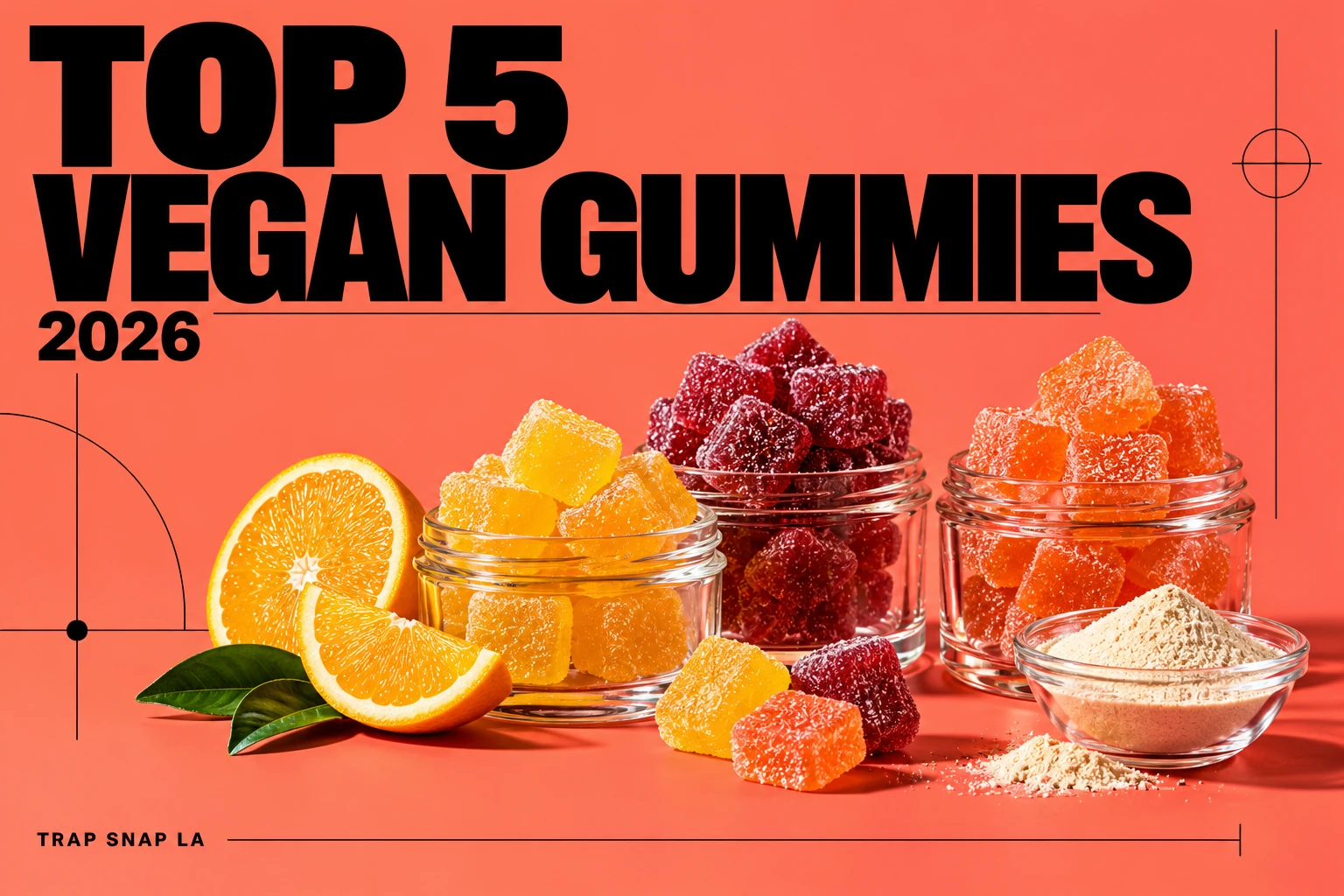
Finding vegan THC gummies in 2026 takes more than looking for a leaf on the package. The useful question is whether the exact recipe is identified as vegan. A fruit flavor, a “natural” claim, and a cannabis ingredient do not answer that question. This guide compares five documented examples without treating every gummy from a brand as the same formula. Vegan THC gummy reviews should identify the exact recipe and the limits of any personal flavor testimony.
Our shortlist is Wana, Camino Sours, Good Tide Mango, PLUS Classic, and KANHA Life NANO Rosin Sours. The KANHA entry comes from the brand’s U.S. hemp catalog, so it is clearly identified rather than presented as the same product channel as the dispensary examples. Availability and local rules need separate verification; this article is about product information for adults where permitted.
How to compare vegan THC gummy product lines
We selected five currently documented U.S.-market gummy lines with explicit manufacturer vegan descriptions. This is a formulation comparison, not an allergy certification, a tasting panel, or a popularity ranking. The KANHA example is from its U.S. hemp catalog; the other named examples are dispensary-market lines.
The key requirement was a vegan claim connected to the product or line being discussed. We then looked for useful recipe and label distinctions. We did not interpret “vegan” as sugar-free, gluten-free, certified allergen-free, or healthier. Each of those would require its own evidence. The aim is a practical shortlist that a reader can verify against a current local package.
Five vegan gummy lines compared
| Named pick | Evidence to check | Detail worth reading |
|---|---|---|
| Wana gummies | Manufacturer vegan description | Exact state and flavor ingredients |
| Camino Sours | Pectin-based vegan line | Sours versus original Camino |
| Good Tide Mango | Manufacturer vegan statement | State-dependent piece and serving |
| PLUS Classic | Manufacturer vegan FAQ | Complete Classic flavor name |
| KANHA Life Sour Island Breeze | Manufacturer vegan FAQ and recipe | U.S. hemp catalog; exact package |
1. Wana: verify the named flavor even within a vegan lineup
Wana’s current FAQ is the brand’s reference for dietary and product questions. Its gummy catalog identifies vegan ingredients and fruit-derived pectin, while noting that some production facilities also make products containing gluten. That gives a starting point for the vegan question without promising a universal allergy profile.
Wana is included because the manufacturer explains the dietary distinction directly. Still, keep the exact flavor attached to your research. A broad vegan statement can help establish the lineup’s approach, but a local ingredient panel is what identifies the recipe in front of you. For readers with more than one dietary requirement, make separate checks rather than allowing one verified claim to stand in for all the others.
2. Camino Sours: the line name matters
Kiva’s Camino overview identifies Sours as vegan gummies made with pectin and lists a 10mg-per-piece format for that line. This is a Sours-specific description. It should not be copied onto every original Camino gummy or every product sold in a similar-looking tin.
The strongest reason to include Camino Sours is the lesson in product naming. A vegan version and a different formulation can exist under one larger brand. Read the line name before judging by the package shape or flavor. If a store listing says only “Camino,” ask for the full product name and ingredient panel. That makes the comparison precise and prevents a dietary mistake based on a broad brand assumption.
3. Good Tide Mango: vegan and rosin are separate details
Good Tide’s Mango product information states that its products are vegan and identifies solventless hash rosin. The page lists a standard 10mg-per-gummy, 100mg-package example and a separate Michigan version whose serving is defined as half a gummy. The exact package should be checked for the relevant formulation.
This pick demonstrates that dietary suitability and extract preference can be researched together without being confused. The vegan claim concerns the recipe; the rosin description concerns the cannabis infusion. Neither replaces the serving information. If your shortlist requires all three details, write them in separate fields. That way an appealing tropical flavor does not quietly become evidence for the extract type or the amount in a whole piece.
4. PLUS Classic: a manufacturer-described vegan line
The PLUS FAQ identifies Classic gummies as vegan and names Sour Watermelon, Clementine, and Blackberry Lemonade in a 5mg THC format. The FAQ also describes pectin in the gummy recipe and provides a route to request certificates of analysis through a package QR code or customer contact.
PLUS is useful for readers who want a compact line comparison. The practical question is whether the exact Classic flavor and current package match the information researched here. Do not transfer a serving amount from Classic to another PLUS line. Equally, do not turn a brand’s testing statement into a personal guarantee. Documentation is worth examining because it helps identify a product, not because a single word settles every quality question.
5. KANHA Life NANO Rosin Sours: a clearly identified hemp-catalog example
The Sour Island Breeze page lists vegan sugar, tapioca syrup, water, pectin, hemp oil, fruit concentrate, and other ingredients. The same page’s FAQ explicitly describes the gummies as vegan. The product is part of KANHA Life’s U.S. hemp catalog. Its headline states 15mg delta-9 THC per piece and 150mg per package; its nutrition section uses a separate serving presentation, making label confirmation important.
KANHA is included as a named vegan formulation, not as a blanket claim about every KANHA product ever made. When an online page presents units differently, do not guess which number is meant for a whole gummy. Ask for the current package panel. Also keep the hemp catalog distinction in your notes; a similar name in a dispensary menu does not prove that the recipe or piece amount is identical.
Vegan is one dietary question, not every dietary answer
Make a short checklist with separate entries for vegan ingredients, gluten information, allergens, sugar information, and any certification you specifically require. A product can satisfy one entry while leaving another unresolved. This is a simple way to avoid assuming that an animal-free recipe automatically fits every dietary preference.
Be especially careful with front-of-package imagery. Fruit illustrations explain flavor marketing; they do not establish the source of every ingredient. Likewise, a green label may be a design choice rather than a dietary certification. The manufacturer’s explicit description and the actual ingredient panel are the useful evidence. If a certification matters to you, look for that named certification rather than treating “friendly” wording as equivalent.
Piece size, serving size, and package totals
A serving and a piece are not always the same unit. A hypothetical 100mg package could contain twenty equal 5mg pieces or ten equal 10mg pieces. If the package instead defines half a piece as a serving, the serving count changes again. These examples explain label arithmetic; they are not guidance on how much to consume.
For a fair comparison, record the exact unit beside every number: per piece, per serving, or per package. If a manufacturer page has an inconsistent presentation, treat that as something to clarify. It is better to leave a field blank than to publish a false certainty. Dietary transparency and serving transparency both matter; a verified vegan recipe does not make unclear cannabinoid information less important.
What a useful 2026 shortlist should leave out
There is no verified nationwide taste contest behind these picks, and no assumed promise of predictable effects. We also do not call a product the healthiest because it has a vegan recipe. The category gives readers a way to identify an animal-free formulation, while the broader product assessment still depends on label clarity and the details that matter to that reader.
Local availability belongs in the final comparison. If only two of these lines are available in your market, compare those exact packages rather than using a distant online listing as proof of stock. A good article can introduce products without claiming every reader can find every item. Keeping that limit clear makes the roundup more useful as catalogs and state formulations change.
Frequently asked questions
Are original Camino gummies and Camino Sours the same recipe?
No. This guide identifies the vegan Sours line specifically. Do not assume a matching brand name means a matching ingredient list.
Does vegan mean gluten-free or allergen-free?
No. Those are separate claims that need separate checks on the actual ingredient and allergen information.
Is the KANHA example a dispensary product?
The Sour Island Breeze product researched here is from KANHA Life’s U.S. hemp catalog, which is identified separately from dispensary-market examples.
Can a vegan gummy contain sugar?
Yes. Vegan describes the animal-free formulation; it does not mean sugar-free. Read the exact nutrition panel.
Our practical verdict
Wana, Camino Sours, Good Tide Mango, PLUS Classic, and the named KANHA Life example all provide documented ways to research vegan THC gummies. Camino especially shows why a line name matters, while Good Tide and KANHA show why serving units require attention. Begin with the vegan claim, confirm the local recipe, then compare the rest of the label. A complete product name is more valuable than a general assumption about the brand.
Related reading
Explore these practical cannabis guides:
More from our 2026 comparison series:
More from our 2026 comparison series
More questions about vegan THC gummy formulations
What do reviews say about Good Tide Mango flavor?
Bowitz’s review praises the original Good Tide lineup’s realistic fruit taste and specifically includes mango. That supports an attributed flavor preference, while the vegan claim still needs the manufacturer’s current recipe information. Erik Bowitz’s Good Tide review.
Does PLUS “Kosher Friendly” mean it shows a kosher certification?
PLUS’s FAQ uses “Kosher Friendly” and mentions pectin, but that wording does not name a certifying organization. If certification matters, verify the actual package and certifier instead of treating friendly as equivalent to certified. PLUS FAQ.
Are Camino Fruit Chews vegan?
Yes. Kiva’s Camino overview separately describes Fruit Chews as vegan. They are a distinct format from Sours gummies, so retain the full line name when checking the ingredient panel. Kiva Camino line overview.
Does a vegan Wana gummy recipe mean it has no expiration date?
No. Wana’s FAQ says its gummies expire and directs readers to the package date, with cool, dry, sealed storage. Vegan is a recipe characteristic, not a shelf-life guarantee. Wana FAQ.
Tags: vegan THC gummy flavor reviews and kosher wording, Camino Fruit Chews vegan product line distinction



Trap Snap LA editorial note: Related reading for this comparison: Why edibles take longer and Top 5 THC Gummy Brands in 2026.