
Top 5 THC Gummy Brands in 2026

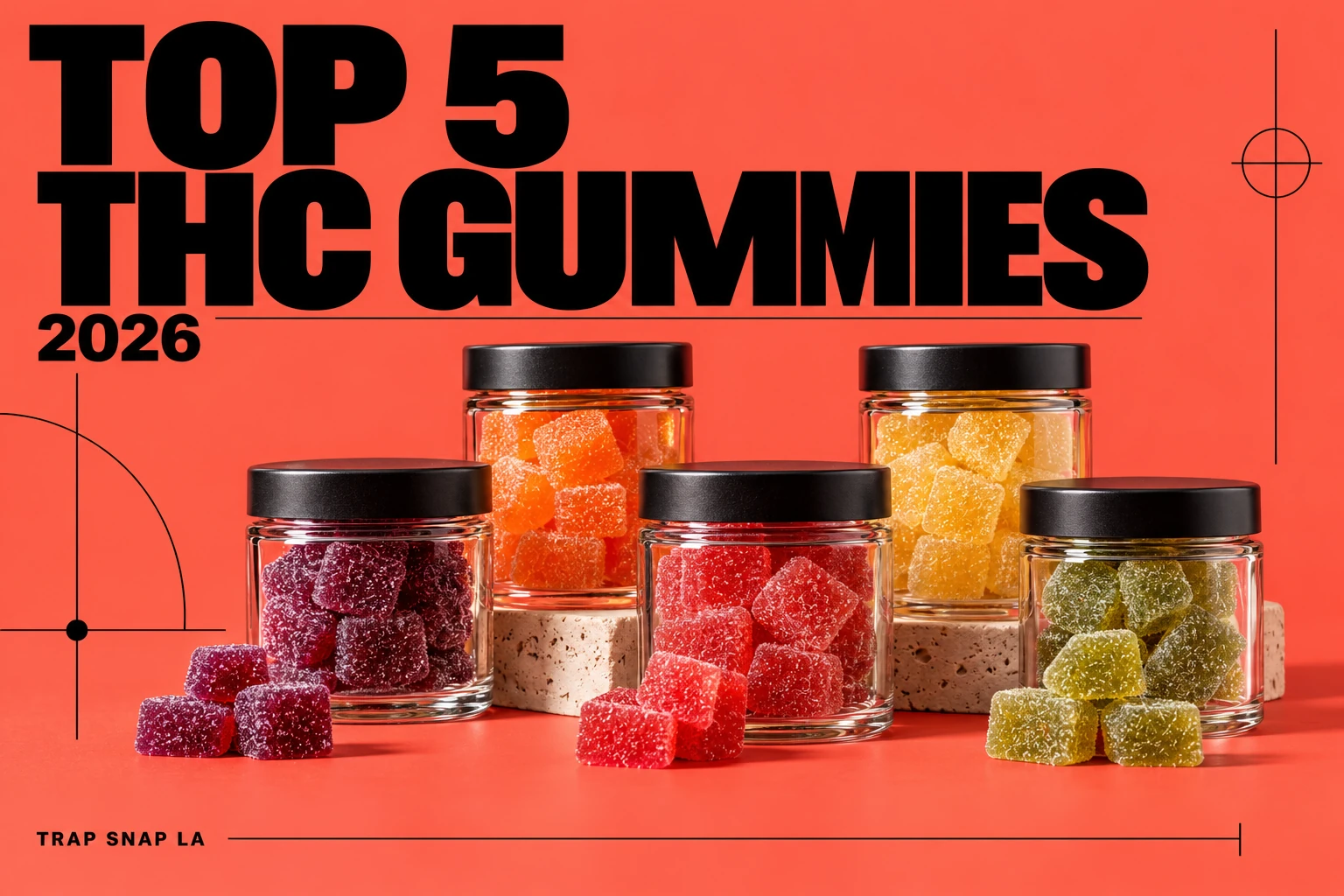
The best THC gummy brand in 2026 depends on what you mean by best. A broad flavor lineup, a vegan recipe, a rosin infusion, and a clearly stated amount per piece are different strengths. A colorful bag can make all of them look similar, so this guide compares the details that actually help you understand the product. THC gummy brand reviews add context when the flavor testimony is attributed to a real reviewer and kept separate from the manufacturer’s ingredient facts.
Our five picks are Wana, Wyld, Camino, Good Tide, and PLUS. They represent different approaches to the same familiar format. Product names below identify the exact examples researched; they do not imply that every item made by a brand has the same recipe. This guide covers U.S. products for adults where permitted, and local packaging remains the final reference.
How to compare THC gummy brands in 2026
We selected five U.S.-market gummy brands with current manufacturer documentation and useful differences in ingredients, extract types, or piece sizes. This is an editorial comparison, not a hands-on taste test, sales ranking, or claim that one product works best for everyone.
A useful roundup should show its work. We considered whether a manufacturer publishes ingredients, identifies a product line, and explains serving information. We did not turn marketing names such as “Chill,” “Active,” or “Uplift” into promises about how a person will feel. We also avoided ranking by the biggest THC number or a price taken from an unrelated state.
The five brands at a glance
| Brand and example | Useful distinction | What to verify |
|---|---|---|
| Wana Signature gummies | Pectin-based brand lineup | Exact flavor, ratio, and state recipe |
| Wyld Raspberry | Published fruit and gelatin recipe | 10mg-piece example and coconut notice |
| Camino Wild Berry | 5mg serving example | Original versus Sours formulation |
| Good Tide Guava | Solventless hash rosin | Batch strain and state package |
| PLUS Classic Clementine | 5mg-piece example | Classic versus other PLUS lines |
1. Wana: a useful starting point for comparing product lines
Wana’s gummy catalog lists several Signature flavors and cannabinoid ratios. Its recipe discussion identifies fruit-derived pectin rather than animal gelatin and describes the gummies as vegan. The catalog also separates live rosin, lower-THC ratios, and other formulations instead of presenting one universal gummy.
That range is Wana’s practical strength in this comparison. It gives a reader several labeled options to investigate without changing brands. The tradeoff is that the brand name alone tells you very little about a specific container. Put the complete product name in your notes, including any ratio or extract description, so a later purchase is a real comparison rather than a guess based on packaging color.
2. Wyld Raspberry: clear ingredient disclosure matters
The manufacturer’s U.S. Raspberry page lists 10mg THC per gummy and 100mg per container, while noting that packaging and amounts can vary by state. Its ingredient list includes raspberry juice concentrate, gelatin, coconut oil, and pectin, and the page carries a coconut notice.
This is a good example of why “real fruit” and “vegan” are separate questions. A recipe can include fruit and still contain gelatin. It is also an example of helpful disclosure: the information gives you something concrete to check against a local label. Readers comparing dietary requirements should start with the ingredients, then move to flavor and format. The order is more useful than assuming a familiar brand automatically fits every diet.
3. Camino Wild Berry: compare the named line, not just the tin
Camino Wild Berry is listed at 5mg THC per serving and 100mg per pack. The published recipe includes gelatin. Kiva states that cannabinoid amounts, ingredients, and allergens can vary by the state where a product is produced.
Camino earns a place here because its product-specific page lets us discuss a precise example. The main shopping distinction is the line name. Original gummies, Sours, and Fruit Chews should not be treated as interchangeable. Even matching flavors can appear in different formats. When you compare two tins, read the words beside the flavor and confirm the amount per serving; an attractive design is not a reliable guide to what is inside.
4. Good Tide Guava: an extract-focused alternative
Good Tide’s Guava product information describes a solventless hash rosin infusion and a vegan recipe. Its standard example is 10mg THC per gummy and 100mg per package; the page separately lists a Michigan formulation with a different amount per whole gummy.
The useful distinction is the stated extract, not an assumed stronger experience. Someone researching rosin edibles gets a clearly identified category to compare. Ask what matters more to you: the extract description, the food recipe, the available package format, or the information you can verify. Those priorities may lead to different choices. Rosin on a label should add information to a comparison, not replace the rest of it.
5. PLUS Classic: a smaller labeled piece in the researched example
The PLUS Classic page lists Clementine at 5mg THC per gummy, 100mg per pouch, and 20 servings. Sour Watermelon and Blackberry Lemonade are also named Classic flavors on that page. Limited flavors are identified separately, which is useful when checking a time-sensitive catalog.
Twenty pieces and ten pieces can carry the same package total. That changes how the package is divided, not the total milligrams listed for the container. PLUS is a useful reference for readers who want the piece count made explicit. Compare the exact pouch with the other examples rather than assuming more pieces means more THC, better value, or a better outcome. All three are different questions.
Serving versus package: the number that gets missed
Here is the arithmetic behind the researched examples. A 100mg container divided into ten equal 10mg gummies differs from a 100mg container divided into twenty equal 5mg gummies. Both containers list the same total THC. The second has twice as many pieces, but each labeled piece contains half as much. This calculation explains packaging; it is not a suggestion about how much to consume.
There is another wrinkle: the label may define a serving as part of a piece. Never assume that one gummy always means one serving. The number beside “per package” belongs to the entire package, while the serving definition tells you what the smaller number refers to. If the product page and package disagree, pause the comparison and use the package and manufacturer clarification rather than averaging the two.
What makes a fair gummy comparison in 2026
Start with four entries in your notes: complete product name, amount per serving, servings per package, and ingredient or allergen restrictions. Then record the extract wording exactly. This keeps “live resin,” “live rosin,” and an unspecified cannabis extract from quietly becoming the same category in your head.
Price belongs near the end. A fair value comparison uses the same market, date, and tax treatment. A sale price at one store cannot establish a national budget winner. You can compare package cost and cost per labeled serving when those details are available, but keep the calculation separate from quality. A lower cost per milligram does not tell you whether the recipe or piece size fits your priorities.
Finally, keep the original package. Product-specific information is easier to revisit when the batch and label stay together. A brand story is useful background; a local label is the document that identifies the item you actually have. That is the simplest way to keep a 2026 roundup useful even as catalogs and state formulations change.
Frequently asked questions
Which THC gummy brand is best in 2026?
There is no universal winner. These five picks offer different strengths in product variety, ingredients, extract disclosure, and labeled piece size.
Are all THC gummies vegan?
No. Check the named product. The researched Wyld Raspberry and original Camino Wild Berry recipes include gelatin.
Does 100mg on a pouch mean 100mg per gummy?
Not necessarily. A package total and the amount in one piece or serving are separate numbers. Check the stated unit on the current label.
Does a rosin gummy automatically work better?
The extract description identifies the formulation. It does not establish that the product will be better for every person.
Our practical verdict
Wana is worth researching for lineup variety; Wyld Raspberry for a clearly published ingredient example; Camino Wild Berry for its product-specific serving disclosure; Good Tide for its hash rosin distinction; and PLUS Classic for its explicit 20-piece format. These are five different reasons for inclusion, not a countdown from worst to best. Choose the comparison category first, then examine the exact local product. That will tell you more than the brand logo alone.
Related reading
Explore these practical cannabis guides:
More from our 2026 comparison series
More questions about THC gummy brands
What do Good Tide reviews say about the fruit flavors?
Erik Bowitz’s Hallowed Gram review favors the realistic fruit flavors in the original pineapple, mango and guava lineup. That is his personal taste judgment; this article has not performed a blind comparison of all five gummy brands. Erik Bowitz’s Good Tide review.
Are Wana gummies sugar-free?
Wana’s current FAQ says it does not yet offer a sugar-free gummy and lists 3 grams of sugar per serving. Confirm the current package’s nutrition panel for the exact formulation. Wana FAQ.
Do PLUS gummies need to be refrigerated?
PLUS says refrigeration is not required and recommends storage below 75°F away from direct sunlight. Follow the actual product label as well, and keep cannabis products secured from children and pets. PLUS FAQ.
Are Camino Fruit Chews the same format as Camino Sours gummies?
No. Kiva describes Fruit Chews as individually wrapped, taffy-like pieces, while Sours are a separate pectin-based gummy line. A shared Camino name should not erase the product-format distinction. Kiva Camino line overview.
Tags: THC gummy fruit flavor firsthand reviews, Wana gummy sugar and storage information



Trap Snap LA editorial note: Related reading for this comparison: Why edibles take longer and Why THC affects people differently.