
A 2,700-Year-Old Weed Stash: What Survived in the Tomb

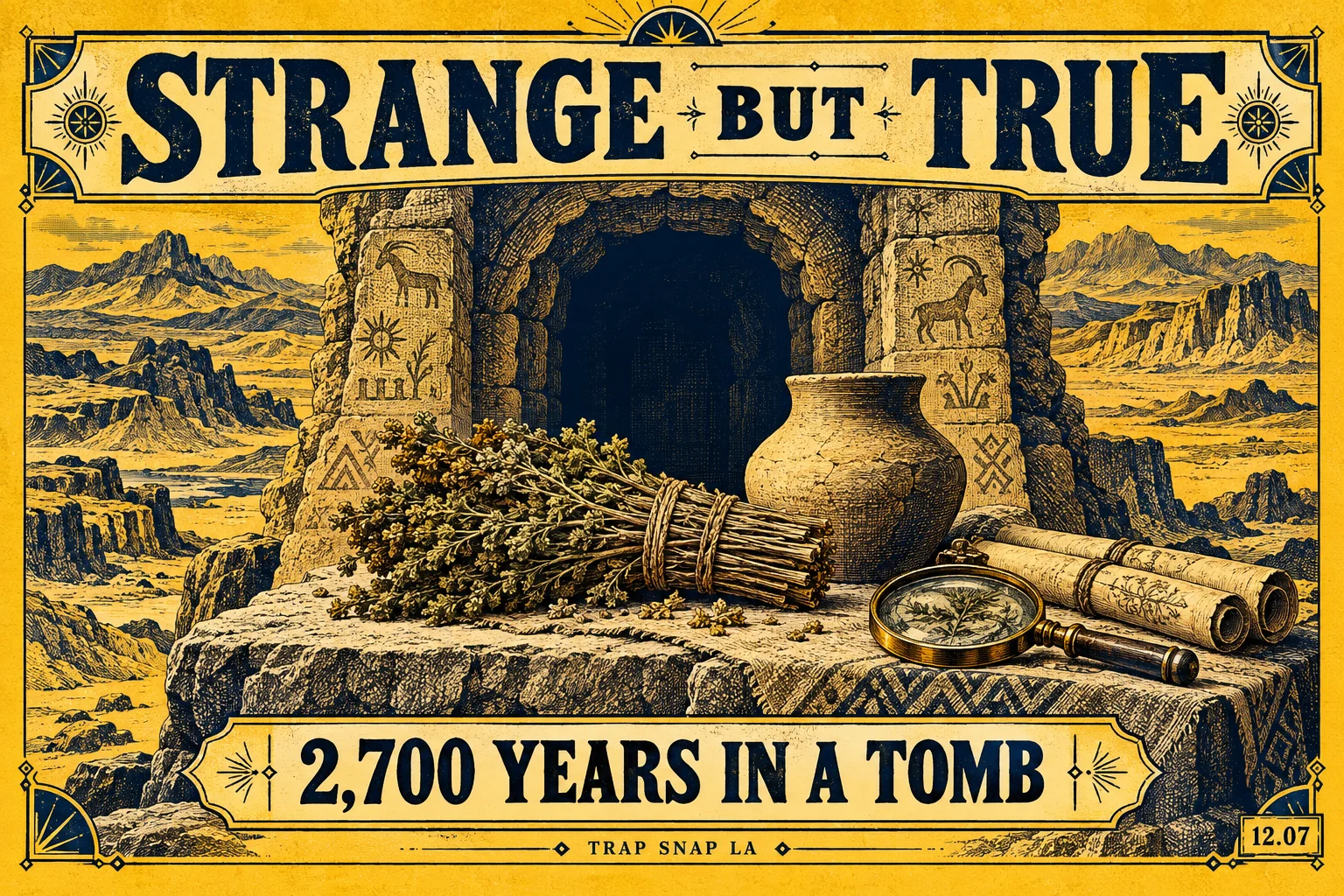
Strange but True · Episode 7 of 7
A roughly 2,700-year-old cannabis cache sounds like the ultimate somebody-forgot-where-they-put-it story. The actual setting is an ancient burial at Yanghai, near Turpan in what is now Xinjiang, China. The material survived long enough for researchers to investigate it with modern botanical, chemical, and genetic methods. The 2,700-year-old cannabis discovery at Yanghai is a documented archaeological finding, with evidence that is more specific than the phrase “ancient weed stash.”
The main paper discussed here was published in 2008. This is a historical research story, not a new discovery announced this week, and the remains do not come with a modern strain label or a recorded review from their original owner.
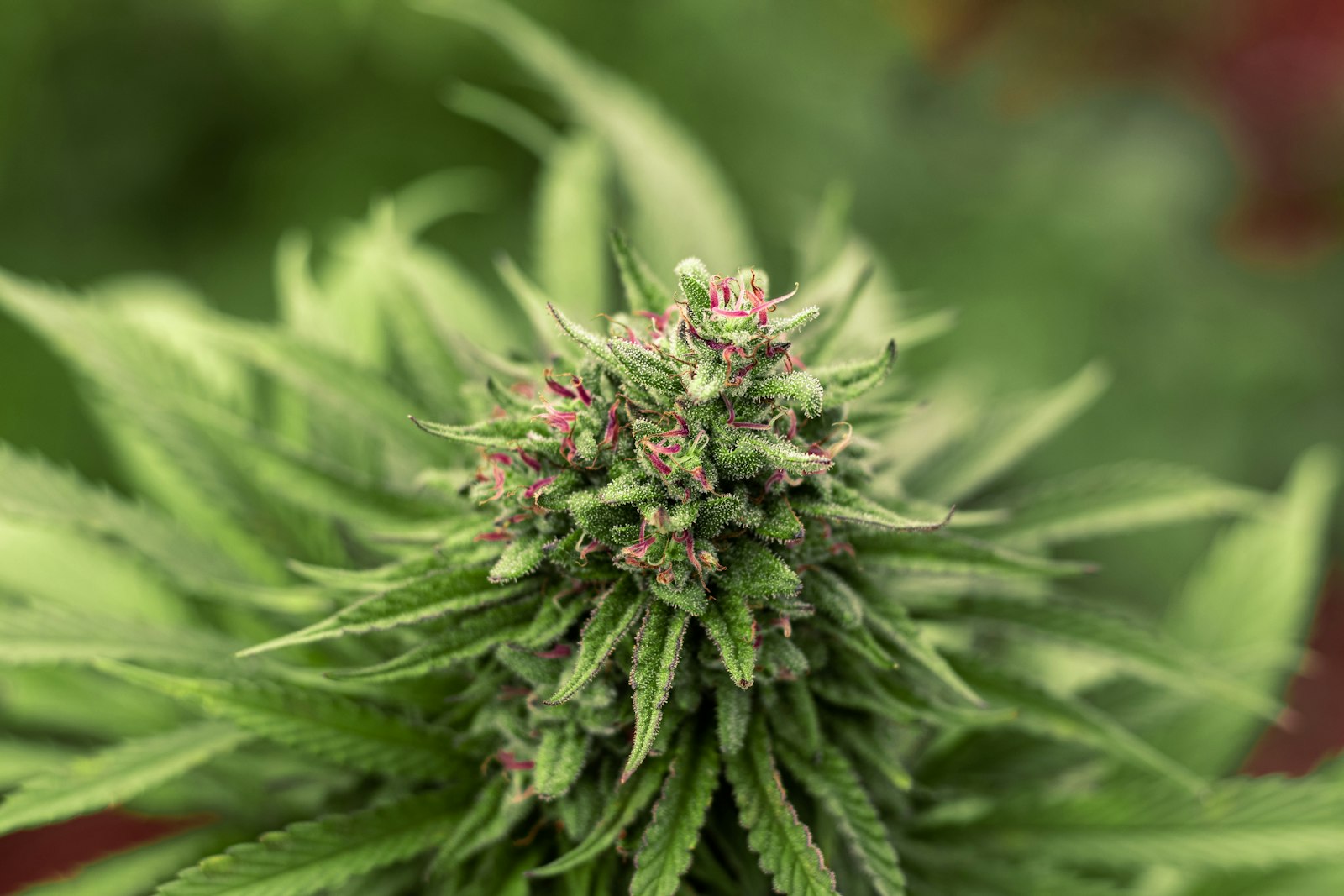
The 2,700-year-old cannabis discovery at Yanghai
Ethan Russo and colleagues described plant material from a tomb identified as M90 in the Journal of Experimental Botany. The paper reports a cache of 789 grams associated with a leather basket and a wooden bowl. Botanical examination identified cannabis, and further chemical and genetic investigation supported the identification.
The researchers reported cannabinoid-related evidence, including THC and its degradation product CBN. They described the burial’s age as a calibrated figure of about 2,700 years and linked the unusual preservation to burial and environmental conditions.
The authors interpreted the grave and its contents as associated with a person holding a ritual role. Their suggested purposes for the cannabis are archaeological interpretations. They do not amount to a surviving personal account explaining exactly what the individual did with it.
See what survived
Photographs of the ancient cannabis material — Scroll to the botanical figures and close-ups. Seeing the surviving fragments makes the age of the find feel a lot more real.
A pile of old plant material can ask several questions
At first glance, the story appears to be about one thing: finding cannabis. In practice, identifying the material, estimating its age, examining its chemistry, and interpreting its place in a burial are different tasks.
That separation makes the research more interesting. A plant identification can be well supported while the exact cultural meaning remains less certain. An age estimate can locate the material in a broad period without supplying a complete history of every person connected with the grave.
The evidence does not need to answer everything to be valuable. It needs to show which question each observation addresses. Otherwise, the phrase ancient weed stash starts acting like a complete biography when it is really a catchy shorthand for a material find.
Preservation is part of the mystery
The paper explains that the environment and burial conditions contributed to preservation. That matters because researchers can examine only what survives. A preserved sample offers information that a completely decomposed plant would not.
Preservation also creates a boundary. Ancient remains have passed through time, and the present material is not a freshly collected version of the original. A measurement made now describes what the researchers could identify in the surviving sample.
You would not assume an ancient textile retains every property it had on the day it was made. The same caution is useful with botanical remains. Recognizing preserved structures or molecules does not reconstruct every characteristic of the original plant or every experience associated with it.
Evidence about a plant is not a modern strain ID
This is cannabis history on a completely different timescale from a modern strain name. The surviving fragments connect us to the ancient plant; attaching a current menu label would add a story the tomb never supplied.
Our feature on famous strain histories already distinguishes attributed modern histories from confidently repeated lore. Ancient material makes that discipline even more necessary: the chronological gap is large, and the labels people use today belong to a very different information system.
Genetic investigation also needs its proper scale. Evidence that contributes to identification is not automatically a complete genomic reconstruction, and a sequence-related finding cannot supply a personal review from the past. Those would require different evidence and, in some cases, information that no longer exists.
The burial tells a story, but interpretation stays visible
Objects placed together can inform an interpretation of a burial. The researchers discussed associated items and proposed a ritual connection. Readers should be able to see that proposal as a proposal rather than an established transcript of a ceremony.
The word stash is similarly our informal headline language. It makes the plant cache easy to picture, but it is not a technical label that resolves ownership, purpose, or frequency of use. The documented object and the imagined scene remain different things.
That is the same evidence boundary explored in our cannabis fact-checking guide. A real discovery can inspire a story without validating every detail an editor adds around it.
What survived the headline
The Yanghai find gives researchers unusually preserved cannabis material from an ancient burial. The 2008 paper combines several forms of evidence, making it a much richer story than a viral photograph of an old green pile.
The remaining questions concern people, purpose, and the original material’s complete properties. Leaving those questions open does not take away the surprise. It lets the surviving evidence do its job without asking it to remember everything.
Sources and further reading
- Russo and colleagues: Journal of Experimental Botany research paper, 2008
- Original open-access paper PDF with botanical figures and research record
- PubMed bibliographic record: Phytochemical and genetic analyses of ancient cannabis from Central Asia
Series cover: original AI-assisted editorial illustration for Trap Snap LA. Photographs carry their own credits.
More questions about the ancient Yanghai cannabis discovery
Was the Yanghai cannabis originally mistaken for coriander?
Yes. The researchers report that the preserved plant material was initially thought to be coriander. Detailed botanical examination identified Cannabis sativa, followed by chemical and genetic investigation. 2008 Yanghai cannabis study.
Why do reports call the Yanghai cannabis 2,700 years old instead of 2,500?
The paper says an initial radiocarbon age of 2,500 years BP was revised to a calibrated 2,700-year figure using additional analyses and correlation with Chinese tree-ring data. Those numbers describe different stages of the dating work. 2008 Yanghai cannabis study.
Did the 2,700-year-old cannabis seeds still grow in the study?
The paper reports no emergence from the 100 ancient achenes tested during its 21-day observation. That is the published result for this archaeological sample, not evidence that all ancient seeds share the same viability. 2008 Yanghai cannabis study.
Tags: Yanghai 2700 year old cannabis archaeological evidence, ancient cannabis dating and seed viability findings


