
Can AI Name a Strain From a Nug Photo?


Receipts Please · Episode 6 of 7
Send a nug photo to an AI and imagine getting back a strain name, an origin story, and a THC percentage in one neat paragraph. It sounds decisive. It also raises a pretty good question: where did all those details come from?
AI weed strain identification is easy to confuse with AI describing a weed photo. Describing visible features is one task. Establishing the pictured specimen’s identity is another. A smooth answer can slide between them without announcing the jump.
The screenshot can look like the argument is over while the actual evidence has barely entered the chat.
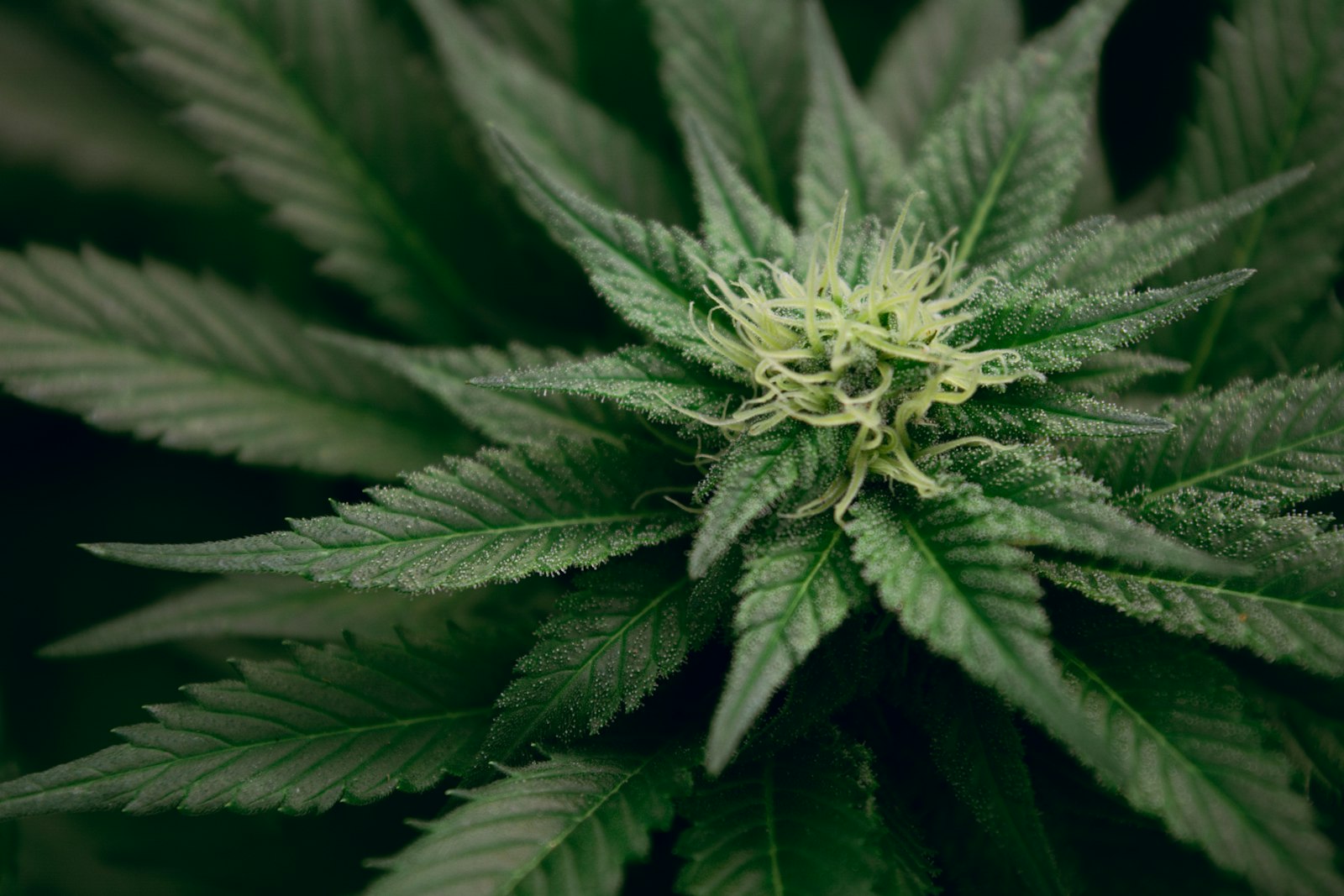
Two imaginary answers, two different jobs
The following comparison is fictional and written for illustration. These are not outputs from a model tested for this article.
Imaginary description: The image shows green and purple plant material, orange threadlike structures, and a pale, textured surface.
Imaginary unsupported identification: This is Gelato 41, grown in California, with 28% THC.
The first answer stays close to visible appearance. Its details can be compared with the pixels, though even a description can make mistakes. The second assigns a cultivar, a geographic history, and a chemical measurement. Those claims need evidence beyond an attractive-looking picture.
Notice how adding specific numbers makes the second answer feel more informed. Specificity is not the same as support. A precise-looking invention is still an invention.
Watch visual search do its thing
Google’s visual-search demonstrations — The demos show what image-and-video questions look like in practice. Keep the article’s nug-photo problem in mind while you watch the broader examples.
Vision research has studied this exact kind of jump
A 2023 EMNLP paper by Li and colleagues investigated object hallucinations in large vision-language models: descriptions that introduced things inconsistent with the target images. Their experiments found that wording in visual instructions could influence the problem, including objects mentioned often or associated with visible objects.
That research evaluated particular models and tasks at that time. It was not a cannabis identification trial, and it does not give an accuracy score for every current AI system. It does establish a useful reason to examine how an image-based answer connects each claim to what was actually supplied.
Why an AI weed photo answer can repeat your guessed strain name
Compare these fictional prompts: Describe the visible features in this photo, and Why does this Gelato look so purple?
The second prompt hands the system the name Gelato before identification has happened. If the response repeats that name, it may be using your premise. That repetition is not independent confirmation.
The same issue appears when the filename contains a cultivar name or the image arrives with a caption. Information can enter through surrounding text as well as the image. The useful question becomes which part of the input supplied the claim.
Our cannabis close-up article explores what visible anatomy can tell you. Naming a structure is a more modest conclusion than assigning the whole plant a commercial identity.
Confidence is something to measure
Very confident is a phrase. A percentage written in an answer is a number. Neither automatically tells you how often comparable identifications are right.
For that, you would want a defined task, specimens whose identities were established independently, and evaluation on relevant examples the system was not simply given as answers. The reported performance would also need to match the kinds of photos being assessed.
A tool evaluated on labeled leaf measurements would not have demonstrated the same result on an unknown dried flower photographed through a filter. The inputs and the question have changed. A benchmark needs a description of what it actually benchmarked.
Can an AI cannabis identification citation be fabricated?
NIST’s 2024 generative AI profile discusses confabulation: confidently presented content that can be false or erroneous. It also notes that generated explanations and citations can be fabricated or misleading. A convincing explanation of an answer can therefore contain the same problem as the answer itself.
Imagine an AI attaching a genuine plant-science paper to the fictional Gelato identification above. If the paper discusses plant anatomy in general, it still has not examined that photographed specimen. A real source can be attached to a claim it does not support.
Our internet cannabis claims guide follows that distinction: open the source and compare its actual conclusion with the claim sitting beside the link.
Use the helpful part without buying the whole story
An image description can suggest visible details to inspect or vocabulary to look up. It can also help separate what appears in a picture from what a caption adds. Those uses do not require pretending the image contains a hidden lab report.
For a cultivar history, the next evidence is a traceable source record. For a chemical number, it is an appropriately matched analysis. Our cannabis lab report guide explains the document side of that second question.
AI can join the conversation. Giving it the last word still depends on the evidence behind that word.
Sources
- Li and colleagues, EMNLP 2023: Evaluating Object Hallucination in Large Vision-Language Models
- NIST, July 2024: Generative Artificial Intelligence Profile
Series cover: original AI-assisted editorial illustration for Trap Snap LA. Photographs carry their own credits.
More questions about AI cannabis photo identification
Does an AI confidence percentage prove a strain identification is accurate?
No. NIST calls for empirically validated evaluation of capability claims. A confidence-looking number in prose does not replace testing on appropriately identified examples. NIST’s generative-AI evaluation guidance.
Can an AI image answer be influenced by the wording of my question?
Yes. The cited vision-language study found that visual instructions could influence object hallucinations. A name supplied in a prompt should not be mistaken for an independent identification. The original object-hallucination study.
Did the visual AI study measure weed strain identification accuracy?
This particular paper does not. It investigates object hallucination in evaluated models and tasks, rather than validating cultivar recognition from unknown dried-flower photos. The paper’s actual scope.
Can a real research link still fail to support an AI answer?
Yes. Check whether the linked source actually establishes the claim being made about the specimen. NIST recommends reviewing and verifying generated sources and citations, which can be erroneous or misleading. NIST’s citation-verification guidance.
Can an AI explanation prove its answer is correct?
No. NIST notes that generated logic or citations can themselves be confabulated. The explanation needs external verification rather than serving as its own proof. NIST’s discussion of confabulation.
Tags: AI weed strain photo identification limits; checking AI cannabis image citations


