
Camino Gummies Guide: Classic Gummies, Sours, and Fruit Chews

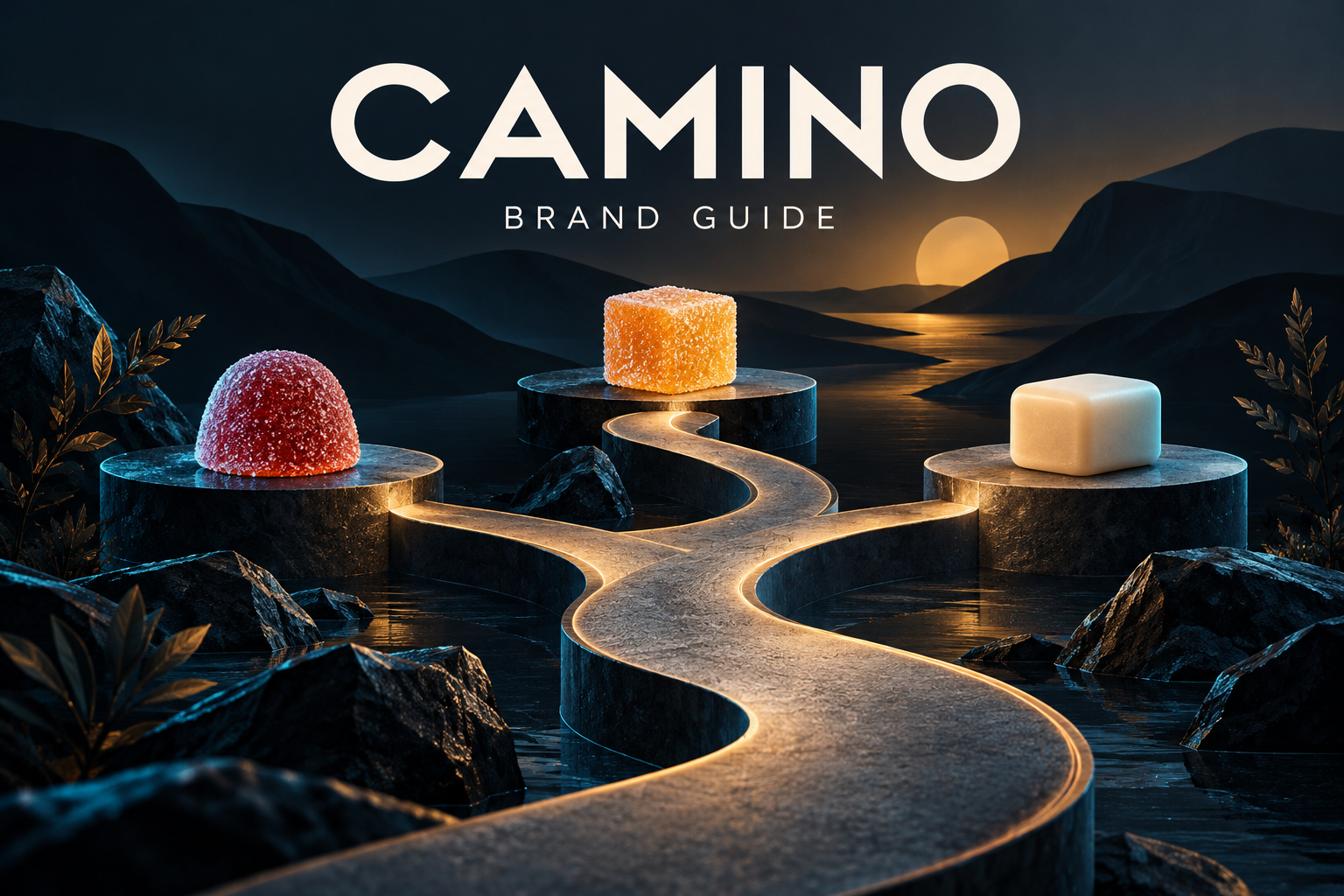
“Chill,” “Balance,” and a fruit flavor can all appear in the same Camino product name. One word describes the brand’s intended positioning. Another describes taste. The numbers beside them describe cannabinoid amounts. Understanding which part answers which question is the key to reading a Camino gummy label.
This guide covers Camino gummies, Sours, and Fruit Chews using Kiva’s official material reviewed October 11, 2026. It is a product-family overview, not a firsthand review. We have not tested flavors or measured effects, and this article does not confirm inventory or a business relationship between Trap Snap LA and Kiva.
What are Camino gummies?
Camino is an edible brand presented by Kiva Confections. Kiva’s official Camino page groups the range into gummies, Camino Sours, and Camino Fruit Chews. It organizes products with fruit flavors and effect-oriented names, alongside cannabinoid information.
That structure explains why searching just “Camino” can produce many apparently similar items. You need the format, full flavor name, and labeled amounts to identify a particular product. A photo of a recognizable tin is helpful context, but the contents still need to be confirmed.
For an adult reading a menu, the practical task is separating product identity from advertising. A descriptive name tells you how the brand presents an item; its package and relevant documentation tell you the specific information needed to compare it.
Camino gummies vs Sours vs Fruit Chews
Classic gummies
The main Camino range includes gummy products with different flavors and cannabinoid combinations. Kiva presents this range through its own experience-oriented language. Treat the family as a catalog category rather than assuming all its products share one formula.
If you remember a familiar flavor, check the entire listing. A retailer can carry a different amount or version than a photograph you found elsewhere. The same broad flavor reference does not establish the same product.
Camino Sours
Kiva describes Camino Sours as a distinct sour gummy format. Its brand page describes pectin-based vegan Sours with a sour-sugar finish. Those details belong to that described family; they should not be generalized to every Camino edible.
Sourness is a taste characteristic. It is not a potency category. If two items differ in both texture and listed cannabinoid amount, keep those differences separate instead of concluding that sour products are inherently stronger.
Camino Fruit Chews
Kiva presents Fruit Chews as individually wrapped, taffy-like vegan pieces. That distinguishes the eating format from gummies. Individual wrapping does not, by itself, identify the cannabinoid amount or make an item appropriate for a particular person.
When comparing these formats, start with clear questions: Is this a gummy or chew? What does the ingredient list say? What cannabinoid amounts apply per piece? What does the package contain overall? Those details are more useful than a broad “which is best?” ranking.
How to read a Camino name without overinterpreting it
Break a product name into three layers. The flavor describes its taste identity. The format describes whether it is a gummy, sour gummy, or chew. The effect-oriented word describes the company’s positioning.
Words such as Chill or Balance should not be interpreted as a clinical finding or a guaranteed personal outcome. This guide does not establish a treatment benefit from any product name. A health-related question requires evidence relevant to that question, rather than a persuasive phrase on a menu.
Here is a hypothetical example: one listing emphasizes “balance” while another emphasizes a fruit flavor. Those words do not provide enough information to compare the products. You still need both cannabinoid labels, ingredients, package amounts, and complete names.
The same caution applies when someone says a gummy felt different from another. Their description can be an honest personal report. It still cannot tell you what every other person will experience from the same named product. Our explanation of why THC affects people differently covers that wider issue.
Read cannabinoid amounts per piece and per package
When a label lists several cannabinoids, keep each amount separate. A THC value and a CBD value should not be added together and relabeled as THC. A ratio expresses a relationship between amounts; it needs the actual numbers to tell you the absolute contents.
For example, a hypothetical package labeled 1:1 can contain equal quantities at more than one total amount. The ratio alone does not distinguish those packages. Likewise, an amount stated for the whole container is different from an amount stated for one piece.
Read the manufacturer’s serving language too. A piece, a serving, and a container are not automatically interchangeable. If you cannot reconcile the numbers, ask the seller or manufacturer to clarify before relying on the listing.
This is label literacy, not a recommendation to consume a particular amount. The right conclusion from an unclear package is that information is missing, rather than inventing a personal dose from a general blog.
Ingredients and dietary questions deserve exact answers
Vegan information for one Camino family does not automatically answer the question for another. Check the specific ingredients and any relevant manufacturer statement. If you have an allergy, do not assume a flavor name tells you whether the product contains a particular ingredient.
A product described through natural fruit flavors still needs its own nutrition and ingredient review. “Natural,” “fruit,” and “vegan” describe different things. None means sugar-free, allergen-free, or suitable for every diet.
A useful question to a retailer is specific: “Can you show me the ingredients and package label for this exact flavor and format?” That is easier to answer accurately than a broad question about the entire brand.
How to request a Camino batch report
Kiva’s lab testing page describes its testing program and explains that a retailer or Kiva support can help provide a certificate of analysis using the product, flavor, and batch number. This is a manufacturer explanation of its process, not an independent test performed for this article.
Keep the original package so those identifiers remain available. When you receive a report, match the details to the product rather than accepting any document bearing the brand name. Ask about discrepancies between a package and a report.
A batch document and a taste review answer different questions. A report can describe measurements and tested categories. A review can describe someone’s preference. Our guide to reading cannabis lab reports helps distinguish those kinds of evidence.
Timing, storage, and everyday practicality
The CDC explains that edible effects may be delayed and unpredictable. Do not interpret an immediate lack of effects as a confirmed product failure. Our edible timing guide discusses the difference between an early impression and the eventual experience.
Retain original labeling and store cannabis edibles securely away from children and pets. Individually wrapped chews should not be left among ordinary candy. A convenient format still needs clear identification.
Camino gummies FAQs
Is Camino the same brand as Lost Farm?
Kiva lists Camino and Lost Farm separately. A product description for one should not be transferred to the other just because they appear on the same company website.
Do Camino Sours and regular gummies have identical ingredients?
Do not assume they do. They are separate formats. Read the specific product’s ingredient information rather than applying a recipe from another family.
Does a “Sleep” or “Recover” product name prove a health benefit?
No health benefit is established in this guide. Those terms are brand positioning, and they should not replace professional advice or evidence for a health claim.
Does an individually wrapped Camino chew contain one labeled serving?
Check the actual package’s serving information. Wrapping identifies a piece, but serving definitions and amounts need to be read independently.
Can a menu photo establish the amount in a different state?
No. Use the physical label and current product information for the item in your location. Regional or format differences should be checked rather than assumed away.
Related guides
- Wyld Gummies Guide: Flavors, Cannabinoid Ratios, and Label Basics
- THC Gummies Guide: Labels, Onset, Ingredients, and Safe Storage
Sources and scope
Reviewed October 11, 2026: Kiva’s Camino overview, sour gummy catalog, lab testing information, and CDC cannabis poisoning guidance. Manufacturer descriptions remain attributed. No firsthand testing, medical recommendation, or current inventory claim was added.


