Top 5 Premium Cannabis Flower Brands in 2026

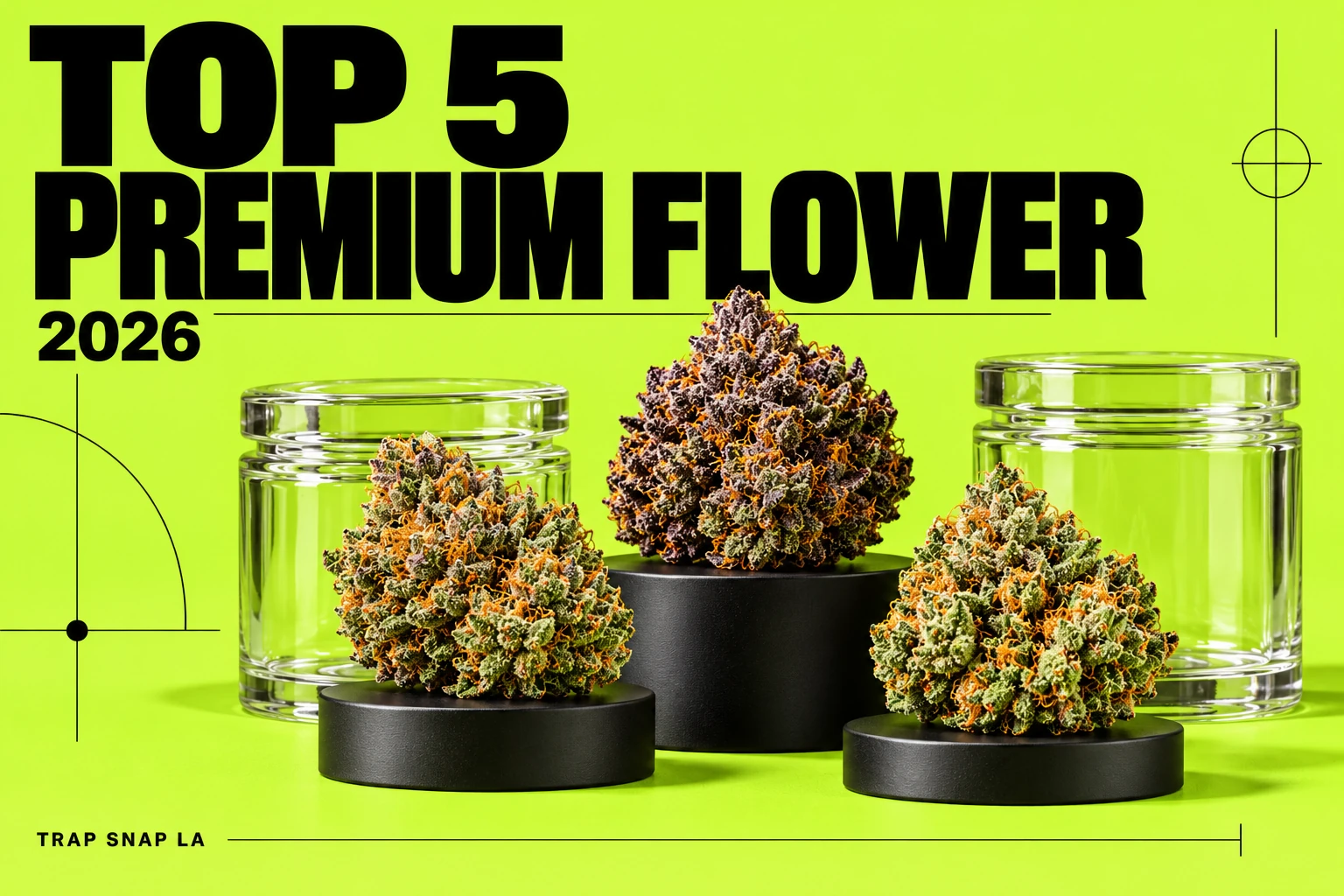
CBX, Fig Farms, Jungle Boys, Connected, and 710 Labs make our premium cannabis flower shortlist for 2026. These five brands provide different reasons to examine a premium package: post-harvest handling, breeder information, a defined indoor line, named genetics, or an explained production approach. The useful question is what supports the premium position of the exact flower being sold. Premium cannabis flower reviews are most useful when they name the product, date and limits of the reviewer’s actual sample.
Premium is not a universal laboratory grade. A high price, a heavy jar, and a dramatic strain name do not answer every quality question. This guide looks at what the manufacturers explain and what a reader can verify on a particular package. It avoids invented taste tests, blanket potency claims, and predictions about an individual’s experience.
How to compare premium cannabis flower brands
We checked official sources on October 4, 2026 and selected five identifiable U.S. market brands with concrete premium-flower information. The list is editorial and organized by the detail each maker emphasizes. We did not compare every flower producer in America, award a numeric score, or assume that a brand’s best-known strain is currently stocked locally. Use these selections as five documented routes into a premium comparison.
Five premium flower brands compared
| Brand | Reason for inclusion | Useful question at the shelf |
|---|---|---|
| CBX / Cannabiotix | Explained post-harvest handling | Does the actual package match the named line? |
| Fig Farms | Cultivar lineage and breeder attribution | Which precise cultivar and producer are listed? |
| Jungle Boys | Defined indoor premium flower offering | What is the package size and batch? |
| Connected | Detailed Permanent Marker identification | Is this the named cultivar and current producer? |
| 710 Labs | Explained in-house flower approach | Which flower tier, size, and batch is offered? |
1. CBX: premium positioning through handling details
Cannabiotix describes dark hang drying, hand trimming, and hand sorting and weighing for its premium flower. These are the company’s production statements, not procedures independently audited for this article.
That level of detail earns CBX a place because it identifies parts of production beyond simply growing the plant. It gives a reader a concrete basis for asking what a premium price represents. Compare those stated practices with the information available for the other package under consideration.
Our advice is to keep the manufacturer explanation separate from the current product evidence. A process description can explain the brand’s priorities, but it does not identify the age or handling of one jar on a store shelf. Note the exact strain, package weight, available batch date, and final price. If those details are missing, a strong general brand story still leaves the individual comparison incomplete.
CBX belongs in this list for readers who want disclosed handling information. It is not automatically the right answer for someone whose only priority is the lowest upfront price or a particular named cultivar.
2. Fig Farms: breeder information you can actually read
On its Pink Fig cultivar page, Fig Farms identifies Purple Fig × Lucky Charms and credits itself with growing, breeding, and pheno hunting the flower.
That makes Fig Farms a useful premium candidate for a reader interested in cultivar development. The information is more specific than a package that merely says exclusive genetics. A clear breeder or producer attribution also gives you a way to distinguish a strain’s name from the company selling a particular batch.
Use the official strain page as context, then compare it with the label offered locally. The same name on an unrelated product should not be treated as proof of the same producer or batch. Our selection is about documented identity and useful research information; it does not claim that a family tree establishes superior effects.
For a premium comparison, record which details matter to you before looking at the price. If breeder information is one of those details, Fig Farms offers a concrete example to investigate. If it is not, do not let an interesting backstory replace the package criteria you already set.
3. Jungle Boys: a clearly defined premium line
Jungle Boys describes its premium flower as indoor grown and hand trimmed. Its current page explains a move from jars to gold mylar bags for its 3.5-gram premium offering.
This is a useful reminder that premium flower is not defined by the container alone. A brand can change its packaging while keeping a named premium line. If you search only for an old jar photo, you might misread the new package rather than comparing its actual description.
Jungle Boys earns a spot for providing a distinct line to evaluate. Look for the precise premium product and its label rather than assuming every item from the producer is identical. A menu can contain several sizes, formats, and names, and the premium label should remain visible in the comparison.
Package material can be one part of a reader’s preference, but it should not be the entire verdict. Compare the disclosed weight, current batch information, manufacturer statement, and final cost. That keeps the discussion focused on the flower offering instead of the appearance of its former packaging.
4. Connected: a specific cultivar comparison
Connected’s Permanent Marker page lists Biscotti × Sherb Bx1 × Jealousy F2 and names limonene, beta-caryophyllene, and linalool as prominent terpenes.
We include Connected because this gives the premium discussion a specific flower example. Instead of saying the brand is simply top shelf, the reader can look at the named cultivar and the information provided for it. That is especially useful when another menu uses a similar strain name.
Separate a brand’s general description from a laboratory result for the particular batch. The source page tells you how the manufacturer identifies Permanent Marker. It does not mean every future package will have an identical composition. Do not copy a catalog description into your notes as if it were a current batch certificate.
Connected fits a premium shortlist for readers who want documented genetics. Compare the exact flower package with another named cultivar at a local retailer, and make clear whether the deciding factor is identity, presentation, availability, or cost.
5. 710 Labs: disclosed production priorities
710 Labs explains an in-house flower approach with organic inputs, hand trimming, and drying and curing guided by bud density. Its product page names several package sizes.
The interesting part is the company’s explanation of what it considers important. We do not turn that explanation into an independent certification or a promise about every jar. It is a stated production approach that can be compared with other manufacturers’ disclosures.
For an individual product, keep the flower tier and size separate from the broader 710 catalog. A brand known for several product categories still needs a flower-specific comparison. Avoid bringing a concentrate description into the evaluation of a flower package just because the logo is the same.
710 earns its place when the reader wants a production-focused premium comparison. The next step is still to check the exact local item, its available date and batch information, and the final cost. That connects an interesting manufacturer explanation to the package being evaluated.
What should a premium price actually buy?
Set three priorities before comparing the five brands. One could be named cultivar information. Another could be a preferred physical flower presentation. A third could be a retailer that supplies clear batch details. A premium price becomes easier to assess when you know which visible differences matter to you.
For example, compare two hypothetical 3.5-gram packages priced at $40 and $60. The second costs $20 more for the same labeled weight. Ask what documented difference explains that extra amount. If the only answer is a prettier box, you have identified the actual tradeoff. If the package has other information you value, note it explicitly rather than assuming the price itself proves quality.
Keep premium and value comparisons connected. A reader may prefer a smaller premium package over a larger budget bag, or may decide that the budget item meets the same personal criteria. Neither choice requires a claim that one brand is superior for everyone. It requires a clear description of the actual products and the deciding factors.
Our premium flower verdict
CBX provides handling details, Fig Farms offers breeder attribution, Jungle Boys defines a premium indoor line, Connected supplies named cultivar information, and 710 explains its production approach. Those are five useful premium angles for 2026. Let the exact package and your stated priorities determine whether its local price makes sense.
Frequently asked questions
Which premium flower brands are in this 2026 roundup?
The editorial picks are CBX, Fig Farms, Jungle Boys, Connected, and 710 Labs. Each offers manufacturer information that supports a concrete premium-flower comparison.
Is premium cannabis a standardized quality grade?
This guide uses premium as a market position, not a universal laboratory grade. Evaluate the named product, disclosed practices, batch details, weight, and final price.
Does a glass jar prove flower is premium?
No. Packaging is one preference, but it does not establish every quality claim. Jungle Boys, for example, describes its premium offering in gold mylar packaging.
How can I decide whether a premium price is worth it?
Compare equivalent weights and identify the documented differences you value. State what the extra cost buys instead of treating the higher price itself as proof.
Related reading
Explore these practical cannabis guides:
More from our 2026 comparison series:
More from our 2026 comparison series
More questions about premium cannabis flower
Who founded Cannabiotix and when?
Cannabiotix’s company history says Neema and JB founded it in Southern California in 2014. It separately identifies its current owners and operators, so founding history should not be treated as a complete ownership timeline. Cannabiotix company history.
Do 710 Labs reviews all agree it is worth the price?
No. InspectorOfAll’s April 2021 Sunset Cookies review liked its appearance but criticized muted aroma and flavor for the price. Neavling’s 2025 Michigan report was mixed across 22 jars. Those are individual dated experiences, not a brand-wide verdict.
Is “organic inputs” the same as certified organic cannabis flower?
No. A production description does not establish certification. California’s flower-label guidance distinguishes regulated OCal claims from the word organic, which has separate requirements. Look for the actual named certification rather than inferring it from inputs. California flower and pre-roll label checklist.
Tags: premium cannabis flower firsthand reviews, Cannabiotix founders and California organic labeling

Trap Snap LA editorial note: Related reading for this comparison: Understanding cannabis terpenes and Top 5 Cannabis Flower Brands in 2026.